
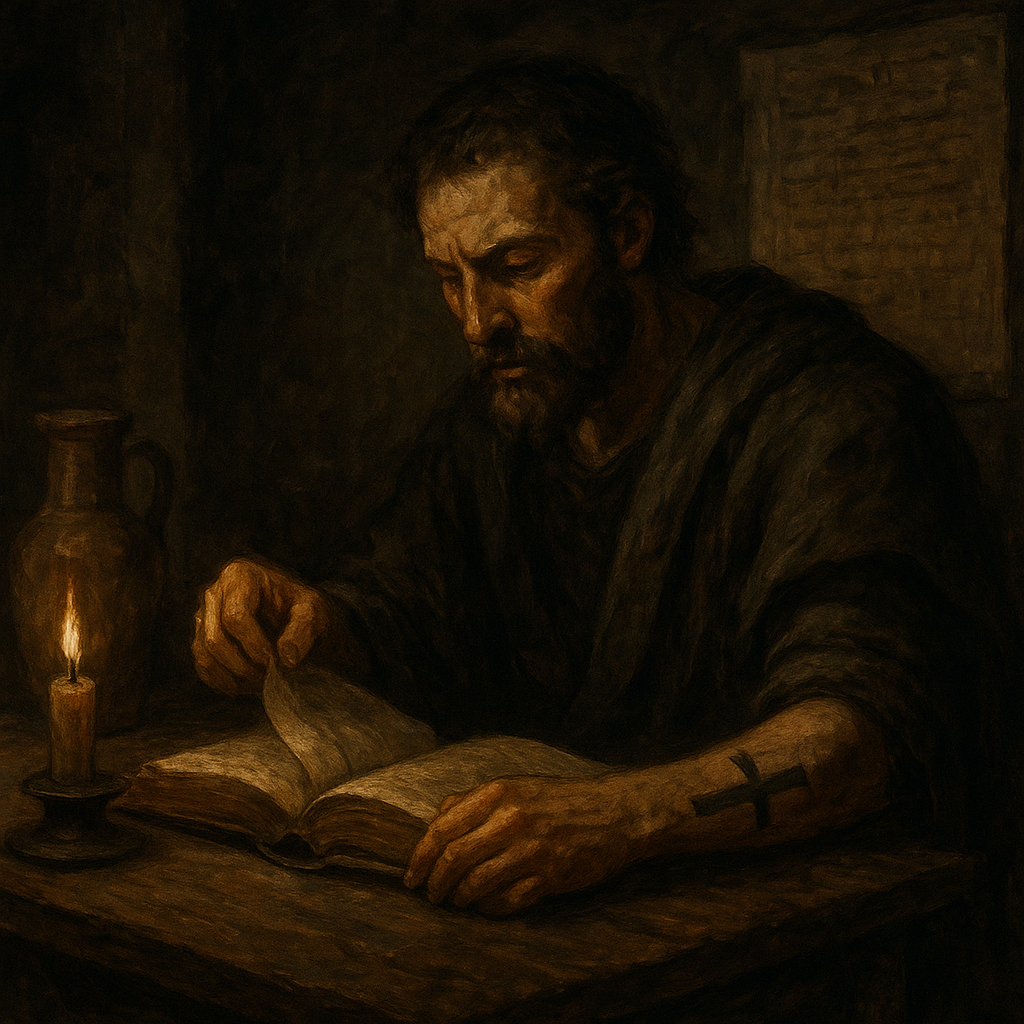
A viral claim says the Ethiopian Bible teaches that tattoos mark you at judgment. Here is what the Book of Enoch actually says, and where the claim really comes from.
No. I searched 1 Enoch directly, and no verse says a tattoo marks the body for judgment. The claim mixes three separate texts into one that does not exist.
The Claim I Keep Seeing
A version of this claim shows up online often enough that it is worth answering directly. It says the Ethiopian Bible, meaning the Book of Enoch, teaches that tattoos leave a mark on your body that testifies against you at judgment. It sounds specific. It sounds sourced. It is not.
What 1 Enoch Actually Says About Bodies and Marking
The closest passage is 1 Enoch 8:1-2. The Watcher Azazel teaches humanity a list of forbidden crafts. He teaches men to forge weapons. He teaches women bracelets, ornaments, eyelid coloring with antimony, and "coloring tinctures," meaning dyes applied to the skin. The text calls this corrupting knowledge, part of what led to the flood.
That is cosmetics, not tattoos. Enoch never calls this permanent. It never ties this decoration to a mark that appears at judgment. It condemns the knowledge itself as forbidden, the same way it condemns weapon-making and sorcery taught by other Watchers in the same chapter.
Judgment in Enoch works through a different image. Deeds get written down daily in a heavenly record, then read out before God (1 Enoch 89-90, the Animal Apocalypse, and again around chapters 47 and 104). Nothing gets written on a person's skin. It gets written in a book.
Where the Mark-on-the-Body Image Actually Comes From
That image belongs to Revelation, not Enoch. Revelation describes a mark of the beast on the forehead or right hand (Revelation 13:16-17) and a seal of God on the foreheads of the redeemed (Revelation 7:3, 14:1). Both are New Testament texts, centuries removed from Enoch and outside the Ethiopian Orthodox canon's Enoch material entirely.
How the Claim Probably Got Built
Three real texts, stitched into one that does not exist. Leviticus 19:28 bans tattoo marks under the Mosaic law. Enoch condemns Watcher-taught body adornment as corrupting knowledge. Revelation puts a mark on the body at the end of days. Combine all three and you get a tidy, shareable claim. Check any one piece against the source and it falls apart.
What This Means for How You Read Enoch
Enoch is worth reading. It shapes real New Testament thinking, and Jude quotes it directly (Jude 1:14-15). But it deserves the same standard you would apply to any other ancient text: check the chapter and verse before you repeat the claim. A lot of what spreads online about Enoch sounds like scripture and reads like folklore. The real text is stranger, and more specific, than most of what gets said about it.
CK Quarterman. C. K. Quarterman is a USAF veteran, independent author, and publisher at CKQbooks (ckqbooks.com). He writes on the malaterrestrials concept, biblical mysteries, and ancient history. Truth · History · Scripture.
Keep researching. Don't miss what's uncovered next.
Get first access to new Encyclopedia entries, Timeline updates, Watchers, Nephilim, Giants, Demons, Deliverance, and UFO/UAP research, plus new books and releases from CKQBooks. Free. Takes ten seconds.