
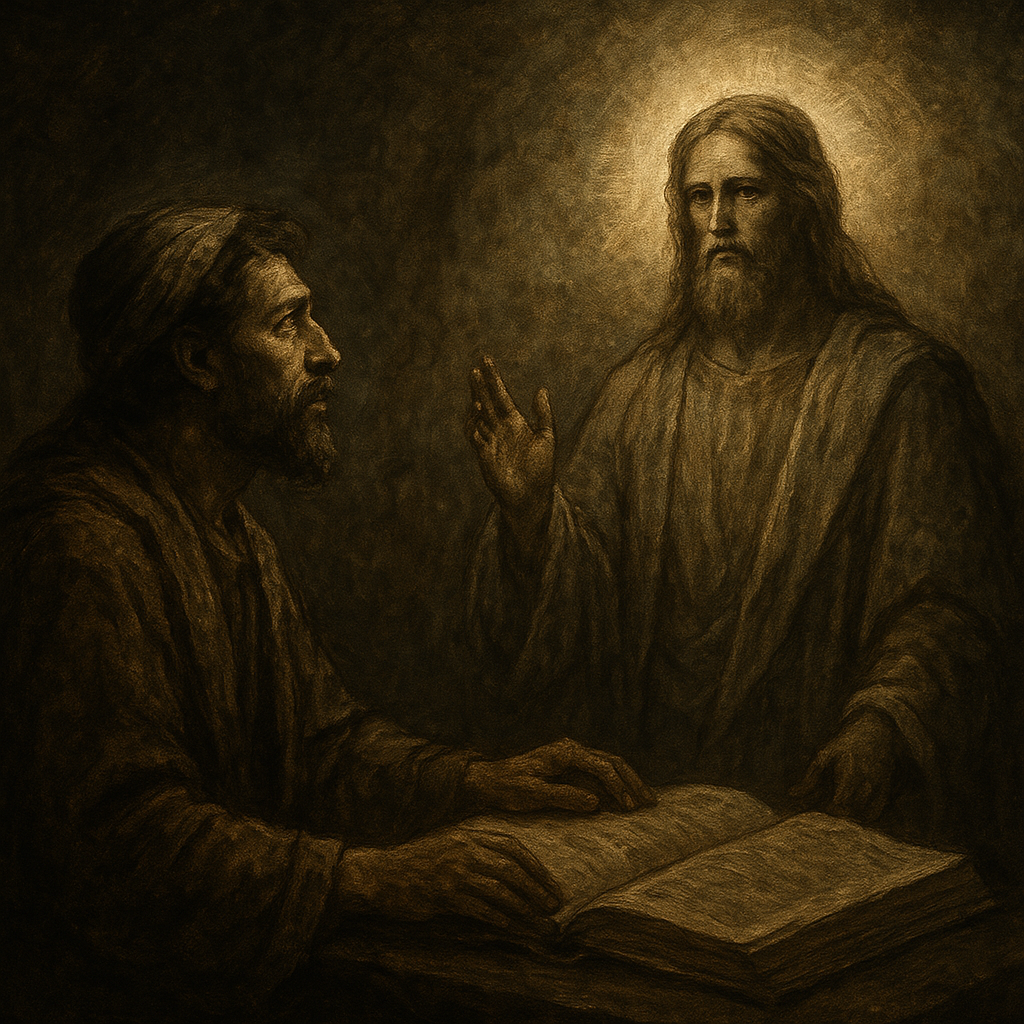
The article shows that the “Son of Man” title Jesus used matches a pre‑existent heavenly judge described in the Similitudes of 1 Enoch, predating Jesus by decades.
Is Jesus the “Son of Man” Foretold in the Book of Enoch?
Keywords: Is Jesus the Son of Man from the Book of Enoch, Book of Enoch Son of Man, 1 Enoch 46, 1 Enoch 48, 1 Enoch 62, 1 Enoch 69, Similitudes of Enoch, Parables of Enoch, Jesus Son of Man title, malaterrestrials
Meta description: The Book of Enoch describes a pre‑existent, heavenly judge called the Son of Man generations before Jesus used that title of himself. Here is the full phrase list, the verses, and what the timing means.
Jesus called himself the Son of Man more than any other title in the Gospels, over eighty times across the four accounts. Most readers assume he coined the phrase or pulled it loosely from Daniel 7. What gets skipped is that a much fuller picture of the Son of Man, a pre‑existent figure who sits on a throne of glory, judges the nations, and is worshipped by kings, already existed in a text the Jewish audience listening to Jesus would have known: the Book of Enoch.
Is Jesus the Son of Man from the Book of Enoch?
The title Jesus uses matches a specific figure already described in the section of 1 Enoch called the Similitudes, or Parables of Enoch, chapters 37 through 71. That figure is called the Son of Man repeatedly, is described as existing before creation, is hidden with God until his appointed time, and is finally revealed to sit in judgment over the whole earth. Jesus doesn't just borrow a title. He steps into a role that a specific body of literature had already spent chapters defining, and does so in front of people who would have recognized exactly what he was claiming.
The Son of Man Phrase List in 1 Enoch
Here is every major appearance of the Son of Man in the Similitudes, in order:
1 Enoch 46:1-4, first appearance. Enoch sees the Ancient of Days, and beside him a second figure whose face is like a man's. An angel identifies him as the Son of Man, the one to whom righteousness belongs, chosen by the Lord of Spirits, destined to depose kings and the mighty from their thrones.
1 Enoch 48:2-3, named before creation. The Son of Man is named in the presence of the Lord of Spirits before the sun, the stars, and the constellations were made.
1 Enoch 48:4-7, light to the nations. He is described as a staff for the righteous, a light to the Gentiles, and the hope of the brokenhearted, hidden by God from before the world began and revealed only to the chosen.
1 Enoch 62:5-9, kings fall before him. Rulers and the mighty are struck with fear when they see him seated on the throne of glory. They plead for mercy and are not granted it.
1 Enoch 62:14, table fellowship with the righteous. The righteous and elect will eat with the Son of Man, forever.
1 Enoch 63:11, sinners driven away. The wicked are driven from his presence, unable to look on him.
1 Enoch 69:26-29, the Son of Man revealed. Great joy breaks out among the angels once the Son of Man is revealed and seated on the throne of glory, given the full sum of judgment.
1 Enoch 70:1, his name lifted up. Enoch's own name is raised into the presence of the Lord of Spirits, setting up the closing scene.
1 Enoch 71:14-17, the identity twist. Enoch himself is greeted as the Son of Man in the closing chapter, a detail scholars still debate the meaning of, but one that shows how deeply the title was tied to final, glorified identity rather than a passing figure of speech.
Read together, this is not a stray phrase. It's a fully developed figure: pre‑existent, hidden, enthroned, worshipped, and given the authority to judge kings. That is the office Jesus steps into every time he says the Son of Man in the Gospels.
How Many Years Before Jesus Was This Written?
This is the part worth being honest about instead of rounding to a tidy number. The Similitudes of Enoch are the one section of 1 Enoch never found among the Dead Sea Scrolls fragments at Qumran, unlike the rest of the book. That absence is why scholars don't agree on a single date. Most place the Similitudes somewhere in the range of the late first century BC to the early first century AD, meaning conservative estimates put the text roughly 50 to 100 years before Jesus's ministry, and some scholars argue for a date close enough to overlap with his lifetime.
Either way, the honest range for the audience question is this: whether the text was decades old or freshly circulating, first‑century Jews had access to a fully formed Son of Man tradition before or during the years Jesus was teaching. That's the detail that matters. Jesus wasn't inventing a title from nothing when he used it. He was stepping into an identity his listeners already had a name and a job description for.
What This Means for Reading Jesus's Words
Every time Jesus says the Son of Man will come in glory, will judge the nations, or will sit on a throne, he's not speaking in riddles. He's using language his audience could trace directly back to a text describing a pre‑existent, heavenly figure appointed to do exactly that. When the high priest tears his robe after Jesus says he will see the Son of Man seated at the right hand of power, coming on the clouds of heaven, in Matthew 26:64, that reaction only makes sense if the title already carried the weight Enoch had given it.
This doesn't require Enoch to be scripture to matter here. It requires Enoch to be read, which the evidence says it was. Jesus took a title with a defined, pre‑existing, worshipped identity attached to it, and applied it to himself in public, in front of people who knew exactly what he was claiming to be.
Related reading: is Enoch scripture, and what Jude and Peter actually believed about the book.
CK Quarterman. CK Quarterman is a USAF veteran, author, and researcher who publishes under the CKQbooks imprint at ckqbooks.com. He developed the Malaterrestrials concept, a term for the evil earthbound non-human intelligences he connects to UFO reports. Truth · History · Scripture.
Topics
Keep researching. Don't miss what's uncovered next.
Get first access to new Encyclopedia entries, Timeline updates, Watchers, Nephilim, Giants, Demons, Deliverance, and UFO/UAP research, plus new books and releases from CKQBooks. Free. Takes ten seconds.