
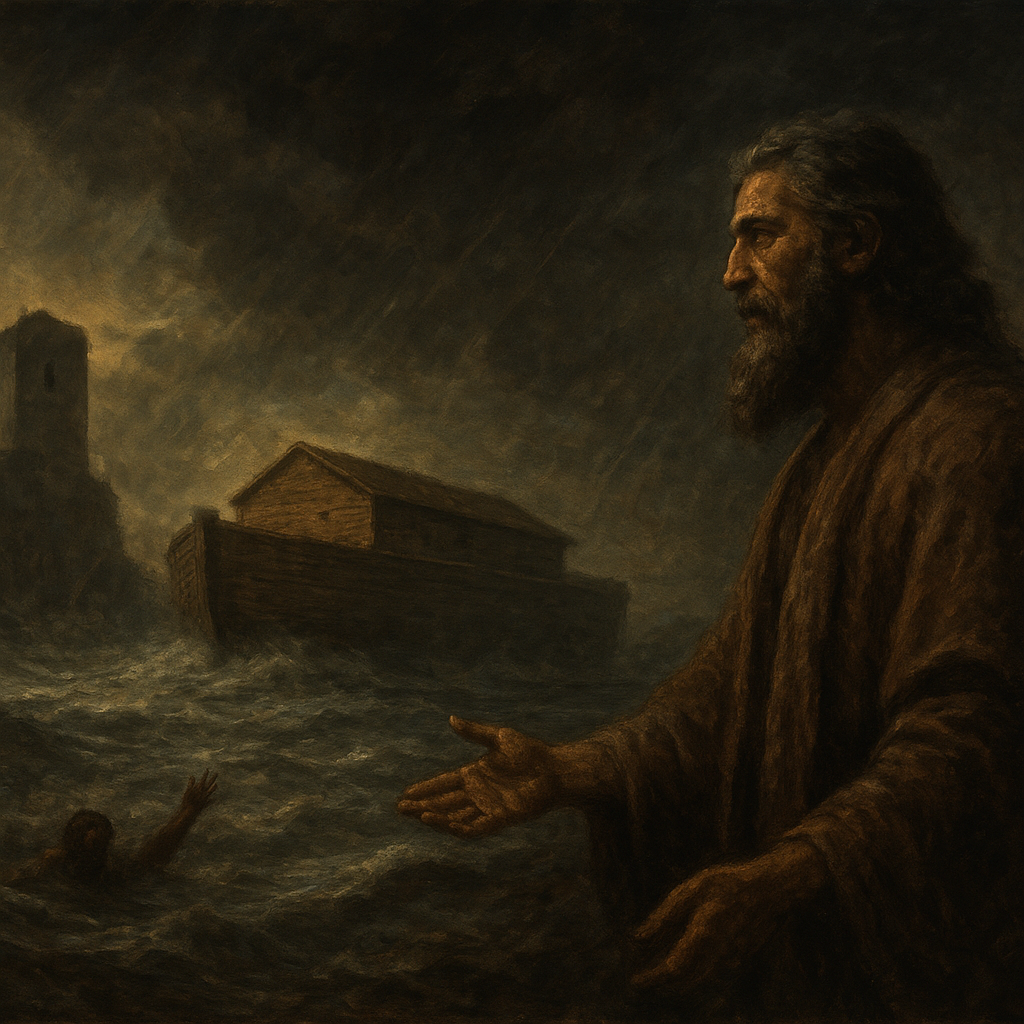
The eleventh tablet of the Epic of Gilgamesh tells the story of Utnapishtim, a king of Shuruppak on the banks of the Euphrates. The god Ea warns him in secret that the other gods plan to send a flood against mankind.
Term: Malaterrestrials — a term for non-human intelligences with terrestrial, not extraterrestrial, origins, documented in ancient near eastern texts and in modern UAP reports alike.
What Does the Epic of Gilgamesh Actually Say About the Flood?
The eleventh tablet of the Epic of Gilgamesh tells the story of Utnapishtim, a king of Shuruppak on the banks of the Euphrates. The god Ea warns him in secret that the other gods plan to send a flood against mankind. Utnapishtim tears down his house, builds a cube-shaped boat, and loads it with his family, a group of craftsmen, and animals of every kind. A storm rages for six days and seven nights. The boat comes to rest on a mountain peak, the only land still above water. Utnapishtim releases a dove, then a swallow, both of which come back. He releases a raven last, and it does not return, telling him the water has receded. Afterward, the god Enlil grants Utnapishtim and his wife eternal life and settles them at the mouth of the rivers, far from ordinary humanity.
The Discovery in the British Museum
George Smith found the flood account while cataloging cuneiform fragments at the British Museum in 1872. He had taught himself to read cuneiform on his lunch breaks, years before anyone gave him a formal position. On December 3, 1872, he read his translation to the Society of Biblical Archaeology in London. The tablets had come out of the ruined library of the Assyrian king Ashurbanipal at Nineveh, excavated in the 1850s by Austen Henry Layard and his assistant Hormuzd Rassam. Smith’s announcement stunned his audience, including Prime Minister William Gladstone, because it put a written flood narrative on the table that predated the Book of Genesis by well over a thousand years.
Ea’s Warning to Utnapishtim
The flood in Gilgamesh does not come as a surprise to Utnapishtim. The gods meet in council and decide to destroy the world. Ea, the god of wisdom, has sworn an oath of secrecy along with the rest of the gods. He gets around that oath by speaking to the wall of Utnapishtim’s reed house rather than to Utnapishtim directly. Utnapishtim, standing on the other side of the wall, hears everything. Ea tells him to tear down his house, abandon his possessions, and build a boat.
The Boat Was a Cube, Not a Ship
This is where popular retellings tend to drift from the text. The boat in Gilgamesh is not a long vessel, wider on one axis than another. Ea specifies equal dimensions on every side, a cube 120 cubits per side, roughly 180 feet. Utnapishtim built it with six decks, which created seven levels counting the roof, and divided the interior into nine separate compartments. He caulked it with bitumen and paid his workers well enough that construction felt like a running feast.
Six Days, Seven Nights
Once the boat was loaded and sealed, the storm broke. It lasted six days and seven nights, battering the boat until the waters finally calmed. The boat settled on a mountain peak identified in the text as Mount Nisir, the only land visible above the flood.
Three Birds
Utnapishtim needed to know whether the water had actually receded before he opened the boat. He released a dove first. It found nowhere to land and came back. He released a swallow next. Same result. He released a raven last. The raven did not return, because it had found dry ground and food. That told Utnapishtim it was safe to leave the boat.
Immortality at the Mouth of the Rivers
Enlil, the god who had ordered the flood in the first place, grants Utnapishtim and his wife eternal life once he learns a man survived. He places them at the mouth of the rivers, a boundary location outside the world of ordinary mortals. Utnapishtim and his wife are the only two people in the entire epic who receive this gift. That is the reason Gilgamesh sought him out in the first place. Gilgamesh wants to know how to escape death, and Utnapishtim is the one man alive who managed it.
How This Compares to Noah
Readers have compared this story to Noah’s flood since Smith’s first translation. Both accounts describe a divine warning to one man, the construction of a large boat, a flood that destroys the rest of humanity, birds sent out to test for dry land, and the survivors starting over. The differences matter too. The Gilgamesh flood comes from a council of gods acting on their own motives, described in the companion Atrahasis epic as their being fed up with human noise. Genesis presents a single God acting out of moral judgment against human wickedness. Utnapishtim’s reward is personal immortality. Noah’s reward is a covenant and a mandate to repopulate the earth under God’s continued authority.
Dating the Text
The earliest Sumerian stories about Gilgamesh trace back to around 2100 BC, close to the end of the Third Dynasty of Ur. Those stories circulated for centuries before a scribe named Sin-leqi-unninni pulled them into the twelve-tablet Akkadian version now called the standard edition, sometime between the 13th and 10th centuries BC. Most references round that to about 1200 BC. The tablet Smith translated in 1872 was a seventh-century BC copy from Ashurbanipal’s library, itself hundreds of years removed from the version Sin-leqi-unninni compiled.
CK Quarterman. CK Quarterman is a USAF veteran and the author behind CKQbooks, where he writes on the malaterrestrials concept, ancient near eastern texts, and the biblical record behind them. Find his books at ckqbooks.com. Truth · History · Scripture.
Keep researching. Don't miss what's uncovered next.
Get first access to new Encyclopedia entries, Timeline updates, Watchers, Nephilim, Giants, Demons, Deliverance, and UFO/UAP research, plus new books and releases from CKQBooks. Free. Takes ten seconds.