
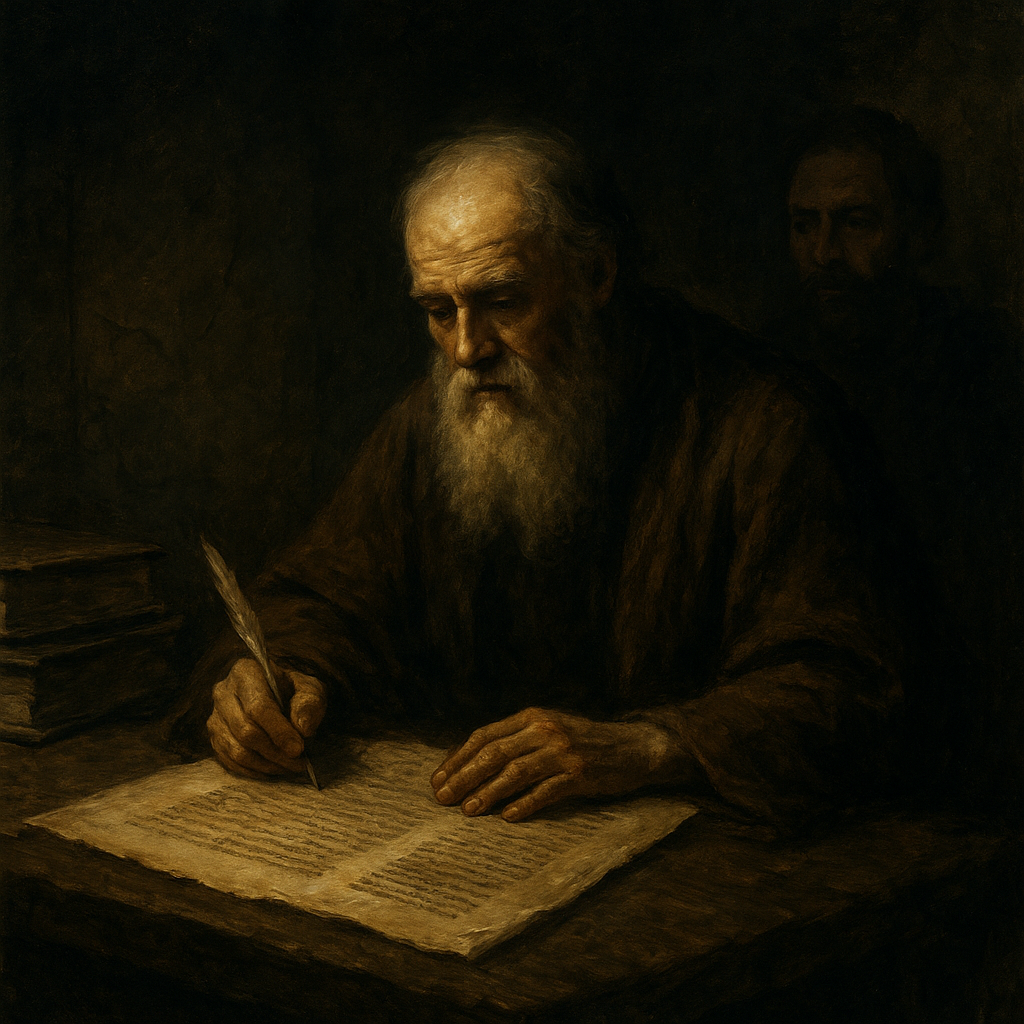
The Nicene Creed, crafted at the Councils of Nicaea (AD 325) and Constantinople (AD 381), defines core Christian belief in the deity of Christ and the Trinity.
The Nicene Creed is the most widely used statement of Christian faith in the world. Bishops wrote it at the Council of Nicaea in AD 325 to settle one question: Is Jesus Christ fully God, or is He a created being? The Creed answers that the Son is “true God from true God, begotten, not made,” and of one substance with the Father.
The version most churches recite today is longer. The Council of Constantinople expanded it in AD 381, mainly by adding a full section on the Holy Spirit. Catholic, Orthodox, and most Protestant churches accept it.
The Crisis Before Nicaea
For three centuries, Christians worshiped Jesus and baptized in the name of the Father, the Son, and the Holy Spirit (Matthew 28:19). They did not always agree on how to explain what that meant. Two errors pulled in opposite directions.
Sabellianism erased the difference between the Father and the Son. Sabellius, a teacher in Rome in the early third century, taught that God is one person who shows Himself as Father, then as Son, then as Spirit. The church in Rome rejected him around AD 220. Tertullian and Hippolytus both wrote against this teaching. It answered the question of God’s oneness but lost the real relationship between the Father and the Son that fills the Gospels.
Arianism erased the Son’s deity. Around AD 318, Arius, a priest in Alexandria, began teaching that the Son was the first and greatest thing God made, but still a creature. His followers put it in a slogan: “There was when he was not.” Arius set his ideas to popular songs, and the dispute spread across the eastern empire.
The Council of Nicaea (AD 325)
Emperor Constantine had legalized Christianity in 313. He wanted a united church, so he called the bishops to the city of Nicaea, in modern Turkey, in the summer of 325. About 250 to 300 bishops attended. Tradition later set the number at 318.
Many of the bishops bore scars from the persecution under Diocletian that had ended only a dozen years earlier. A young deacon named Athanasius came with his bishop, Alexander of Alexandria. Athanasius would spend the next 50 years defending what Nicaea decided.
The bishops found that Arius’s party could accept almost any biblical phrase by giving it their own meaning. So they chose one word Arius could not accept: homoousios, of one substance with the Father. All but two bishops signed the Creed. Arius and those two bishops were exiled.
The Original Creed of 325
The first Nicene Creed was shorter than the one churches use today. Here is a translation of the Greek text:
“We believe in one God, the Father Almighty, maker of all things visible and invisible. And in one Lord Jesus Christ, the Son of God, begotten of the Father, only-begotten, that is, of the essence of the Father, God from God, Light from Light, true God from true God, begotten, not made, of one essence with the Father, through whom all things were made, both in heaven and on earth; who for us men and for our salvation came down and became flesh, was made man, suffered, and rose again on the third day, ascended into heaven, and is coming to judge the living and the dead. And in the Holy Spirit.”
The Creed of 325 then closed with a condemnation aimed directly at Arius:
“But those who say, ‘There was when he was not,’ and ‘Before he was begotten he was not,’ and that he came into being out of nothing, or who claim that the Son of God is of another substance or essence, or is created, changeable, or alterable, these the catholic and apostolic church condemns.”
What the Key Phrases Mean
“Begotten, not made.” A man makes a table, but he begets a son. What a father begets shares his own nature. The Son is not something God built. He shares God’s own nature.
“Of one essence with the Father.” Whatever the Father is as God, the Son is also. This phrase closed the door on Arius.
“God from God, Light from Light, true God from true God.” The Son comes from the Father without being a lesser God. Hebrews 1:3 calls Him “the brightness of his glory, and the express image of his person.”
“Through whom all things were made.” If all things were made through the Son, He cannot be one of the things that were made. The Creed takes this straight from John 1:3.
“For us men and for our salvation.” The Creed ties the doctrine to the gospel. Only God can save. If Jesus is a creature, He cannot bring us to God.
The Creed of 381
The Arian controversy did not end in 325. Several emperors favored the Arian side, and Athanasius was exiled five times. The dispute also widened to the Holy Spirit, whose deity some church leaders denied.
In AD 381 the Council of Constantinople reaffirmed the faith of Nicaea and completed the Creed. It added detail about Christ’s life, including His birth “by the Holy Spirit” of “the Virgin Mary,” His crucifixion “under Pontius Pilate,” His burial, and His seat “at the right hand of the Father.” It added the line “his kingdom will have no end” against Marcellus of Ancyra, whose teaching leaned toward Sabellianism and suggested Christ’s reign would one day end. And it added a full section on the Holy Spirit:
“And in the Holy Spirit, the Lord, the giver of life, who proceeds from the Father, who with the Father and the Son is worshiped and glorified, who spoke through the prophets. In one holy, catholic, and apostolic church. We confess one baptism for the forgiveness of sins. We look for the resurrection of the dead and the life of the world to come. Amen.”
This 381 text is the Nicene Creed recited in churches today. Western churches later added the phrase “and the Son” to the line on the Spirit’s procession. That addition, called the filioque, became a major point of division between the Eastern and Western churches.
How to Use the Nicene Creed Today
The Creed is a summary of Scripture, not a replacement for it. Here are practical ways to put it to work:
Read John 1:1-14, Colossians 1:15-20, and Hebrews 1:1-4 next to the Creed. You will find nearly every line about Christ rooted there.
Memorize it. The full Creed takes about one minute to recite and gives you an outline of the faith you can carry anywhere.
Use it to test teaching. When a group says Jesus was a created being, a lesser god, or only one mode of God, the Creed shows you where it departs from the historic faith.
Read Athanasius, On the Incarnation. It explains in plain terms why the Creed insists that Jesus is fully God.
Related reading: Who Was Athanasius of Alexandria?
About the Author
CK Quarterman is a USAF veteran, independent author, and publisher at CKQbooks. He writes the Malaterrestrials nonfiction series, which examines evil earthbound non-human intelligences through Scripture and history, along with the Watchers’ Universe and Sons of the Flood fiction series. Find his books at ckqbooks.com.
Truth · History · Scripture
CK Quarterman. CK Quarterman is a USAF veteran, independent author, and publisher at CKQbooks. He writes the Malaterrestrials nonfiction series, which examines evil earthbound non-human intelligences through Scripture and history, along with the Watchers’ Universe and Sons of the Flood fiction series. Find his books at ckqbooks.com. Truth · History · Scripture
Topics
Explore in the Encyclopedia
Keep researching. Don't miss what's uncovered next.
Get first access to new Encyclopedia entries, Timeline updates, Watchers, Nephilim, Giants, Demons, Deliverance, and UFO/UAP research, plus new books and releases from CKQBooks. Free. Takes ten seconds.