
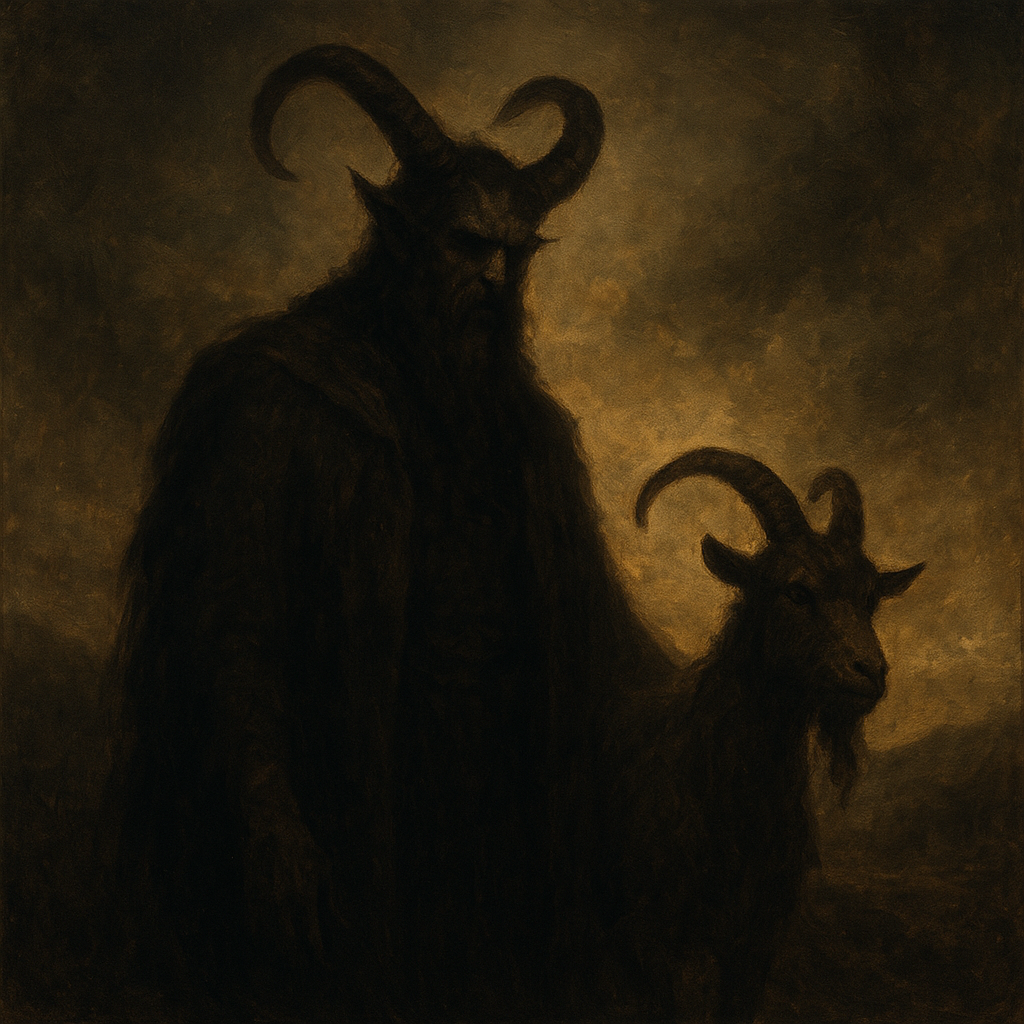
Cynocephaly – Dog Headed Men
Also known as: Cynocephaly, Dog Headed Men, jackal
The characteristic of cynocephaly, or cynocephalus (/saɪnoʊˈsɛfəli/), having the head of a dog—or of a jackal—is a widely attested mythical phenomenon existing in many different forms and contexts. The literal meaning of “cynocephaly” is “dog-headed”; however, that this refers to a human body with a dog head is implied.
Cynocephaly – Dog Headed Men The characteristic of cynocephaly, or cynocephalus (/saɪnoʊˈsɛfəli/), having the head of a dog—or of a jackal—is a widely attested mythical phenomenon existing in many different forms and contexts. The literal meaning of “cynocephaly” is “dog-headed”; however, that this refers to a human body with a dog head is implied. Often, such creatures also have human intelligence. Such cynocephalics are known in mythology and legend from many parts of the world, including ancient Egypt, Greece, and China. Further mentions come from the medieval East and Europe. In modern popular culture cynocephalics are also encountered as characters in books, comics, and graphic novels. Cynocephaly is generally distinguished from lycanthropy (werewolfism) and dogs that can talk.
The word cynocephaly is taken (through Latin) from the Greek word κῠνοκέφᾰλοι kynokephaloi, from kyno– (combining form of κύων kyōn) meaning “dog” and κεφαλή kephalē meaning “head”.[image error]
Cynocephaly was familiar to the ancient Greeks from representations of the Egyptian gods, Duamutef (Son of Horus), Wepwawet (The opener of the ways), and Anubis (the Egyptian god of the dead). The Greek word (Greek: κῠνοκέφᾰλοι) “dog-head” also identified a sacred Egyptian baboon with the face of a dog.
Reports of dog-headed races can also be traced back to Greek antiquity. In the fifth century BC, the Greek physician Ctesias, in his Indica, wrote a detailed report on the existence of cynocephali in India. Similarly, the Greek traveller Megasthenes claimed to know about dog-headed people in India who lived in the mountains, communicated through barking, wore the skins of wild animals and lived by hunting. Herodotus reports claims by ancient Libyans that such creatures inhabit the east of their lands, as well as headless men and various other anomalies. The best estimate for the place where the battle between the Argonauts and the Cynocephali took place is modern day North Serbia, or South Hungary.
The cynocephali offered such an evocative image of the magic and brutality deemed characteristic of bizarre people of distant places that they kept returning in medieval literature. Augustine of Hippo mentioned the cynocephali in The City of God, Book XVI, Chapter 8, in the context of discussing whether such beings were descendants of Adam; he considered the possibility that they might not exist at all, or might not be human (which Augustine defines as being a mortal and rational animal: homo, id est animal rationale mortale), but insisted that if they were human they were indeed descendants of Adam
Ibn Battuta encountered dog-mouthed people on his journey, in an island somewhere between India and Sumatra:
Fifteen days after leaving Sunaridwan we reached the country of the Barahnakar, whose mouths are like those of dogs. This tribe is a rabble, professing neither the religion of the Hindus nor any other. They live in reed huts roofed with grasses on the seashore, and have abundant banana, areca, and betel trees. Their men are shaped like ourselves, except that their mouths are shaped like those of dogs; this is not the case with their womenfolk, however, who are endowed with surpassing beauty. Their men too go unclothed, not even hiding their nakedness, except occasionally for an ornamental pouch of reeds suspended from their waist. The women wear aprons of leaves of trees. With them reside a number of Muslims from Bengal and Sumatra, who occupy a separate quarter. The natives do all their trafficking with the merchants on the shore, and bring them water on elephants, because the water is at some distance from the coast and they will not let the merchants go to draw it for themselves, fearing for their women because they make advances to well-formed men. Elephants are numerous in their land, but no one may dispose of them except the sultan, from whom they are bought in exchange for woven stuffs.
Paul the Deacon mentions cynocephali in his Historia gentis Langobardorum: “They pretend that they have in their camps Cynocephali, that is, men with dogs’ heads. They spread the rumor among the enemy that these men wage war obstinately, drink human blood and quaff their own gore if they cannot reach the foe.” At the court of Charlemagne, the Norse were given this attribution, implying un-Christian and less-than-human qualities: “I am greatly saddened” said the King of the Franks, in Notker’s Life, “that I have not been thought worthy to let my Christian hand sport with these dog-heads.” The ninth-century Frankish theologian Ratramnus wrote a letter, the Epistola de Cynocephalis, on whether the Cynocephali should be considered human (he thought that they were). If human, a Christian’s duty would be to preach the Gospels to them. If animals, and thus without souls, such would be pointless. Quoting St. Jerome, Thomas of Cantimpré corroborated the existence of Cynocephali in his Liber de Monstruosis Hominibus Orientis, xiv, (“Book of Monstrous men of the Orient”). The thirteenth-century encyclopedist Vincent of Beauvais acquainted his patron Saint Louis IX of France with “an animal with the head of the dog but with all other members of human appearance… Though he behaves like a man… and, when peaceful, he is tender like a man, when furious, he becomes cruel and retaliates on humankind”.
The Nowell Codex, perhaps more commonly known as the manuscript containing the Anglo-Saxon epic Beowulf, also contains references to Cynocephali. One such reference can be found in the part of the manuscript known as The Wonders of the East, in which they are called “healfhundingas” or “half-dogs.” Also, in Anglo-Saxon England, the Old English word wulfes heafod (“wolf’s head”) was a technical term for an outlaw, who could be killed as if he were a wolf. The so-called Leges Edwardi Confessoris, written around 1140, however, offered a somewhat literal interpretation: “[6.2a] For from the day of his outlawry he bears a wolf’s head, which is called wluesheued by the English. [6.2b] And this sentence is the same for all outlaws.”Cynocephali appear in the Old Welsh poem Pa Gur? as cinbin (dogheads). Here they are enemies of King Arthur’s retinue; Arthur’s men fight them in the mountains of Eidyn (Edinburgh), and hundreds of them fall at the hand of Arthur’s warrior Bedwyr
Medieval travellers Giovanni da Pian del Carpine and Marco Polo both mention cynocephali. Giovanni writes of the armies of Ögedei Khan who encounter a race of dogheads who live north of the Dalai-Nor (Northern Ocean), or Lake Baikal.[20] The Travels of Marco Polo mentions the dog-headed barbarians on the island of Angamanain, or the Andaman Islands. For Polo, although these people grow spices, they are nonetheless cruel and “are all just like big mastiff dogs”.In The Voyage and Travels of Sir John Mandeville, dog-headed men are described as inhabiting the island of Nacumera (the Nicobar Islands) According to Henri Cordier, the source of all the fables of the dog-headed barbarians, whether European, Arabic, or Chinese, can be found in the Alexander Romance.
In the United States there are tales of dog-headed creatures, including the Michigan Dogman, and the wolf-like Beast of Bray Road of Wisconsin.
Scripture References
Sources
Historical RecordAugustine of Hippo mentioned the cynocephali in The City of God, Book XVI, Chapter 8, fifth century BC, the Greek physician Ctesias, in his Indica, wrote a detailed report on the existence of cynocephali in India.
Keep researching. Don't miss what's uncovered next.
Get first access to new Encyclopedia entries, Timeline updates, Watchers, Nephilim, Giants, Demons, Deliverance, and UFO/UAP research, plus new books and releases from CKQBooks. Free. Takes ten seconds.