
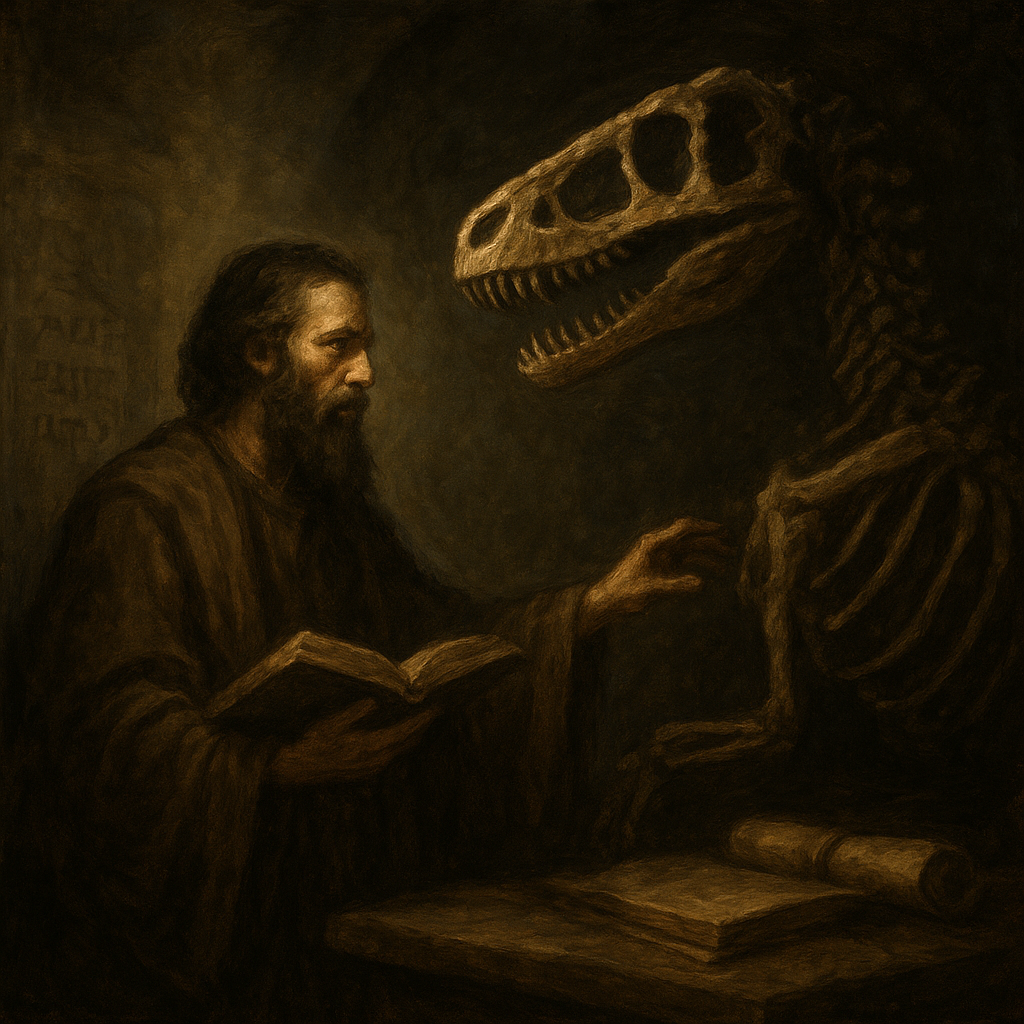
Dinosaurs never get mentioned by name in scripture, but that doesn't mean the Bible has nothing to say about them. Here are the main ways this question actually gets approached.
The Bible never uses the word dinosaur, for the simple reason that the word didn't exist until 1842, when the paleontologist Richard Owen coined it. That doesn't settle the question of whether scripture describes these animals under a different name, or whether they fit into the Genesis timeline at all. Several serious approaches to this question exist, and they don't agree with each other.
Behemoth and Leviathan
The strongest textual candidates for dinosaur-like animals in scripture are Behemoth and Leviathan, both described at length in Job 40 and 41. Behemoth is described with a tail like a cedar tree and bones like bars of iron, details that don't fit hippos or elephants especially well, the two animals most commonly proposed as naturalistic identifications. Leviathan is described as breathing fire and smoke, covered in impenetrable scales, and unafraid of weapons, details that go well beyond any crocodile or whale on record.
Some readers take these descriptions as poetic exaggeration describing real but ordinary animals. Others take them more literally, arguing the descriptions fit large reptilian creatures better than anything else on the list, including animals that could plausibly overlap with what we now call dinosaurs or other large extinct reptiles.
Genesis 1 and the Order of Creation
Genesis 1:24-25 describes God creating land animals, including "every thing that creepeth upon the earth," on the sixth day, the same day humans were created. If dinosaurs are included under this description, a straightforward reading of Genesis would place them alongside humans rather than hundreds of millions of years earlier, which is where mainstream paleontology places them. This is one of the central points of disagreement between young-earth and old-earth readings of Genesis, and it doesn't have a single answer that all serious readers of the text agree on.
Extinction and the Flood
For readers who place dinosaurs within the Genesis timeline, the Flood becomes the most common explanation for their disappearance. Genesis 6-9 describes a global catastrophe severe enough to wipe out nearly all land animals outside those preserved on the ark. Whether large dinosaurs could have been practically included on the ark, and whether the Flood alone accounts for their absence from the modern world, are separate questions that this view has to address, and different proponents answer them differently.
Where This Leaves the Question
None of these approaches enjoys universal agreement, even among people who take scripture seriously. What's clear is that the absence of the specific word "dinosaur" doesn't mean the Bible is silent on large, unusual animals that don't map cleanly onto anything alive today. Behemoth and Leviathan remain the most direct textual evidence worth wrestling with, whatever conclusion a reader ultimately reaches about what they were.
CK Quarterman. CK Quarterman is a USAF veteran and the author behind CKQbooks, writing on the malaterrestrials concept, biblical mysteries, and ancient history. Find more at ckqbooks.com. Truth · History · Scripture.
Explore in the Encyclopedia
Nephilim
The offspring of the "sons of God" and the "daughters of men" described in Genesis 6, traditionally understood as giants.
Antediluvian
The period of biblical history between the creation of Adam and the flood of Noah, covering Genesis 1 through 6. The term was coined by the English writer Thomas Browne in the seventeenth century.
Keep researching. Don't miss what's uncovered next.
Get first access to new Encyclopedia entries, Timeline updates, Watchers, Nephilim, Giants, Demons, Deliverance, and UFO/UAP research, plus new books and releases from CKQBooks. Free. Takes ten seconds.