
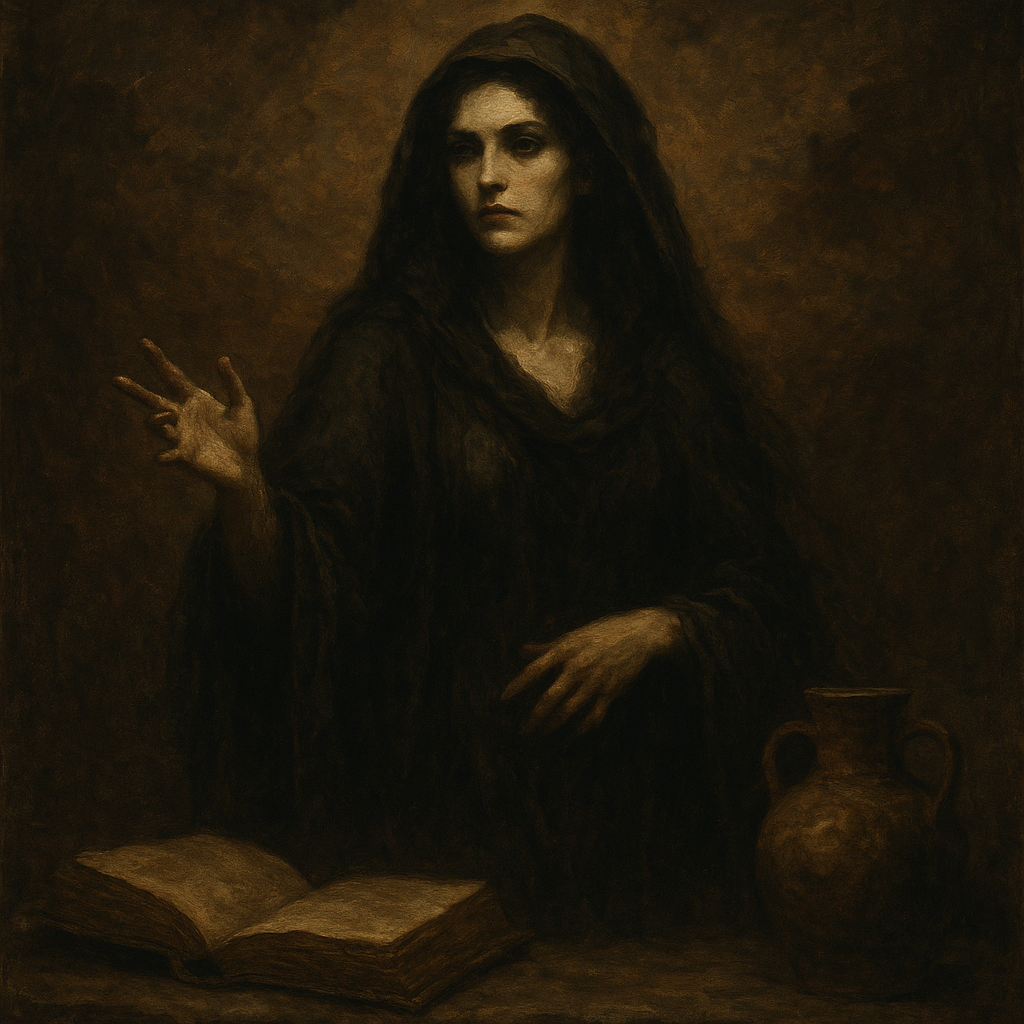
Lilith appears by name once in the Bible, in Isaiah 34:14, in a poem about the ruin of Edom. Scholars disagree on what the word means.
Term: Lilith: The English form of the Hebrew word lilit, which appears once in the Hebrew Bible, in Isaiah 34:14. Scholars debate whether it names a female night demon or a night bird or other wild creature.
Term: Lilitu: The Akkadian word for a female spirit in Mesopotamian incantation texts, related to the male lilû and the maiden-demon ardat lilî. Scholars debate how directly it connects to the Hebrew word.
Term: Malaterrestrials: Evil, earthbound non-human intelligences, understood in this series as the spirits of the Nephilim and distinct from the holy angels of heaven.
Who Is Lilith in the Bible?
Lilith appears by name once in the Bible, in Isaiah 34:14, in a poem about the ruin of Edom. Scholars disagree on what the word means. Some read it as a female night demon. Others read it as a night bird or another wild creature. The famous story that Lilith was Adam’s first wife comes from a medieval text, not from Scripture.
What Isaiah 34:14 Says
Isaiah 34 announces judgment on Edom. Human society empties out, and the ruined cities fill with wild creatures. Verse 14 lists several of them. In one common rendering, wildcats meet hyenas, goat demons call to each other, and the lilit rests there and finds a place to settle.
The word appears nowhere else in the Hebrew Bible. Scholars often decide its meaning by reading the whole list of creatures together, since the other terms are better documented. The Great Isaiah Scroll from Qumran reads the word as a plural, liliyyot. That may mean some ancient readers saw a group and not a single figure.
How Translators Handled It
Translators disagreed from the start. The King James Version says screech owl. The NIV says night creatures. The NRSV says Lilith. Ancient translators went another way. The Greek Septuagint reads a demon in the verse, and the Latin Vulgate renders the lilit as lamia, a child-killing female monster from Greek myth. The range shows how little translators had to go on.
Where the Name Came From
Mesopotamian texts name a class of spirits: the male lilû, the female lilītu, and the maiden-demon ardat lilî. They appear in incantations meant to protect people from illness, stillbirth, and night attack. Descriptions place the lilītu in desert lands and open country and say she endangers pregnant women and infants. Some sources trace her name to a Sumerian word for wind.
Some scholars link the Hebrew lilit to these spirits. Others connect it to the Hebrew word laylah, which means night. The link is debated. Several items once used to prove it are now disputed. Scholars now generally identify the Burney Relief as Inanna or Ishtar, and the Arslan Tash amulets and a Gilgamesh appendix are contested as evidence.
Lilith in Later Jewish Writing
The Dead Sea Scrolls contain a clear reference in the Songs of the Sage, where the name appears in a list of hostile spirits. The Babylonian Talmud mentions Lilith in several passages, including Eruvin 100b, Niddah 24b, and Shabbat 151b.
The story that Lilith was Adam’s first wife appears in the Alphabet of Ben Sira, dated to about 700 to 1000 AD. Some readers treat that work as satire. The story does not come from Isaiah or any other book of the Bible. Some rabbinic authorities, including Maimonides and Menachem Meiri, rejected the existence of Lilith.
The Case That Lilith Is Not a Demon
Judit Blair argues that no Old Testament passage refers to demons and that every creature in Isaiah’s list is a real animal. Her reading has support in the verse itself. The surrounding terms are animals, and many translations render the goat demons in the same verse as wild goats. A Christian reading adds that nothing else in the Bible supports a demon here.
If she is right, the demonic reading loses its strongest Old Testament text. The evidence does not settle the question. You should know both sides before you decide.
A Possible Echo in Matthew 12:43
Isaiah 34:14 says the lilit finds a resting place in the ruins. In Matthew 12:43, Jesus says an unclean spirit passes through dry places looking for rest. The two passages share the idea of a night creature or spirit settling in an empty place. This is a verbal parallel and not a proven allusion. No New Testament writer cites Isaiah 34:14 in that passage.
How I Read It
My hypothesis is that Isaiah 34:14 names a class of wilderness spirits, the same class as the goat demons in the same verse and in Leviticus 17:7, and that this class matches what I call malaterrestrials. This is my framework, and Scripture does not state it. The strongest support is the ancient translations and the Dead Sea Scrolls, which treat these figures as demons. The strongest objection is Blair’s reading of the list as animals.
What to Do With This
Read Isaiah 34 in full, with three translations side by side, before you accept any claim about Lilith.
Ask which layer a claim draws on: Isaiah, Mesopotamian texts, the Talmud, the Alphabet of Ben Sira, or modern invention.
Treat any source that presents the Adam’s-first-wife story as biblical as unreliable.
If you face occult activity tied to the name, the New Testament response is authority in the name of Jesus (Luke 10:17).
Read more: The wilderness spirits, including the lilit and the goat demons, are the subject of my next book, working title Malaterrestrials: The Evil Earthbound Entities Behind UFOs, Cryptids, and Shapeshifters.
CK Quarterman. CK Quarterman is a USAF veteran, author, and researcher, and the source of the malaterrestrials concept. He publishes through CKQbooks at ckqbooks.com.
Topics
Explore in the Encyclopedia
Keep researching. Don't miss what's uncovered next.
Get first access to new Encyclopedia entries, Timeline updates, Watchers, Nephilim, Giants, Demons, Deliverance, and UFO/UAP research, plus new books and releases from CKQBooks. Free. Takes ten seconds.