
Hebrew Term Definition Cards
A concise lexical study of the Hebrew terms ‘Alukah’ and ‘Rephaim’, covering their biblical occurrences, meanings, and later folklore.
## Hebrew Term Definition Cards
Source passages: Proverbs 30:15; Deuteronomy 2:11, 3:11; Genesis 14:5; Isaiah 14:9, 26:14; Psalm 88:10; Proverbs 2:18, 5:5, 7:27, 9:18, 21:16.
## עֲלוּקָה ‘aluqah’
Root letters
ע-ל-ק (‘-l-q)
Part of speech
Noun, feminine singular
Literal meaning
Horse-leech; a bloodsucking creature
Root sense
The root ‘-l-q carries the idea of clinging or attaching, consistent with a leech that fastens onto its host to feed.
Biblical occurrences
Proverbs 30:15 only. This makes Alukah a hapax legomenon, a word that appears exactly once in the Hebrew Bible.
Immediate context
“The Alukah has two daughters, crying, Give, give.” Grouped with other things in Proverbs 30 that never say ‘enough’: Sheol, a barren womb, dry ground, and fire.
Standard translation
Leech (most modern versions)
Extended or folkloric sense
Later Jewish folklore, including the Sefer Hasidim, reads the Alukah as a shapeshifting, blood-drinking demon rather than a simple insect. Some traditions connect her to Lilith.
Comparative evidence
Seventh-century BC Arslan Tash amulets use closely related Northwest Semitic language to ward off blood-drinking night demons, showing the concept circulating in the wider culture that produced the Hebrew Bible.
Working definition
Alukah: a Hebrew term for a leech-like creature whose hunger is never satisfied, read in later tradition as a bloodsucking demonic figure.
## רְפָאִים Repha’im
Root letters
ר-פ-א (r-p-’)
Part of speech
Noun, masculine plural
Literal meaning
Giants (as an earthly people); shades or spirits of the dead (as an underworld class)
Root sense
The same consonants form the root for ‘to heal’ (r-p-’). Scholars debate whether Rephaim is related to that root or is a separate, older term absorbed into Hebrew. The dominant view treats the two as distinct despite the shared spelling.
Sense 1: Earthly giants
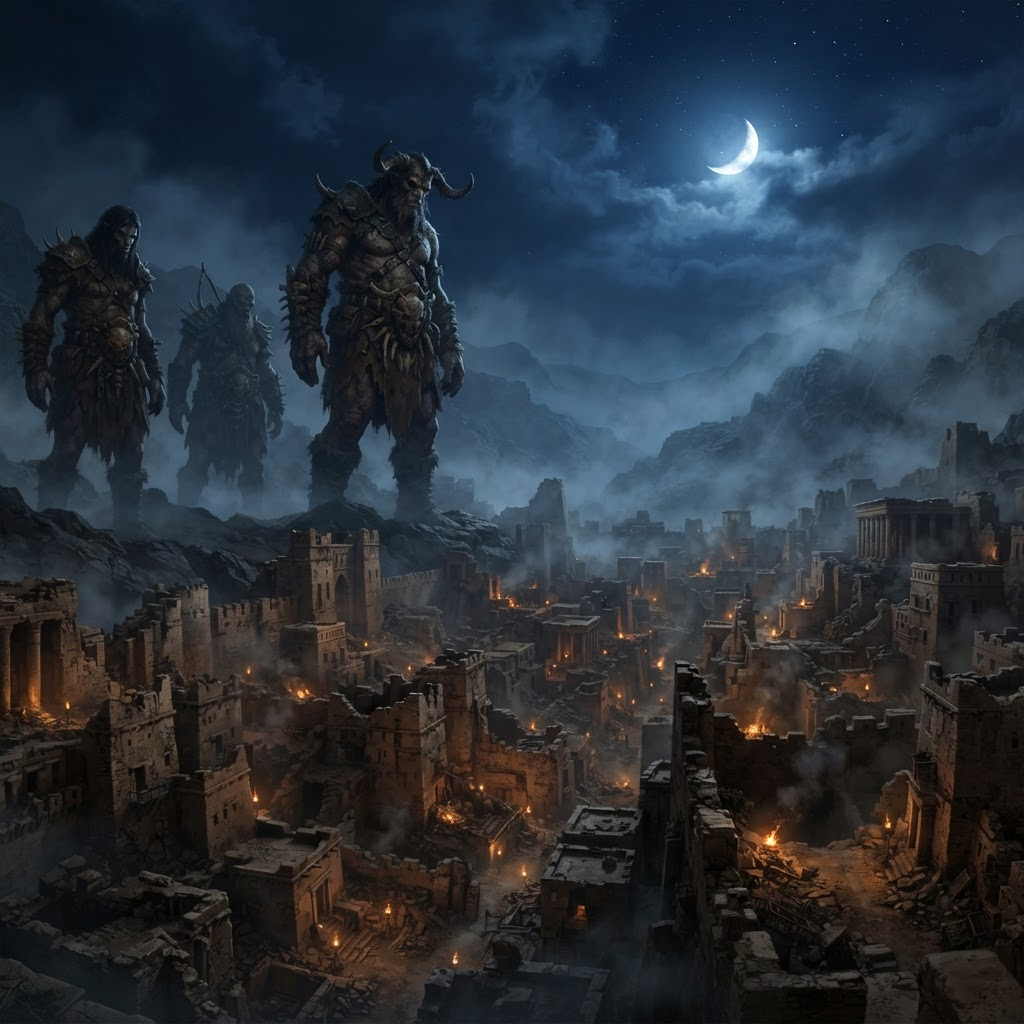
Deuteronomy 3:11 names Og, king of Bashan, as the last of the Rephaim, with a bed thirteen feet long. Genesis 14:5 and Deuteronomy 2:11 place the Rephaim among the giant clans descended from the Nephilim.
Sense 2: Underworld shades
Isaiah 14:9 says Sheol stirs the Rephaim to greet a fallen king. Isaiah 26:14 says the Rephaim will not rise again. Psalm 88:10 asks, ‘Do you work wonders for the Rephaim?’
Proverbs usage
Proverbs 2:18, 5:5, 7:27, 9:18, and 21:16 each place the guests of the seductive woman Folly among the Rephaim, linking her house to Sheol rather than to ordinary death.
Standard translation
‘Shades,’ ‘departed spirits,’ or ‘the dead’ (context-dependent); ‘giants’ in the ethnic-group texts
Working definition
Rephaim: a Hebrew term naming both a historical giant people and, after death, a distinct and restless class of spirit confined to Sheol.
Scripture References
Sources
Biblical TextProverbs 30:15; Deuteronomy 2:11, 3:11; Genesis 14:5; Isaiah 14:9, 26:14; Psalm 88:10; Proverbs 2:18, 5:5, 7:27, 9:18, 21:16; Sefer Hasidim; Arslan Tash amulets
Keep researching. Don't miss what's uncovered next.
Get first access to new Encyclopedia entries, Timeline updates, Watchers, Nephilim, Giants, Demons, Deliverance, and UFO/UAP research, plus new books and releases from CKQBooks. Free. Takes ten seconds.