
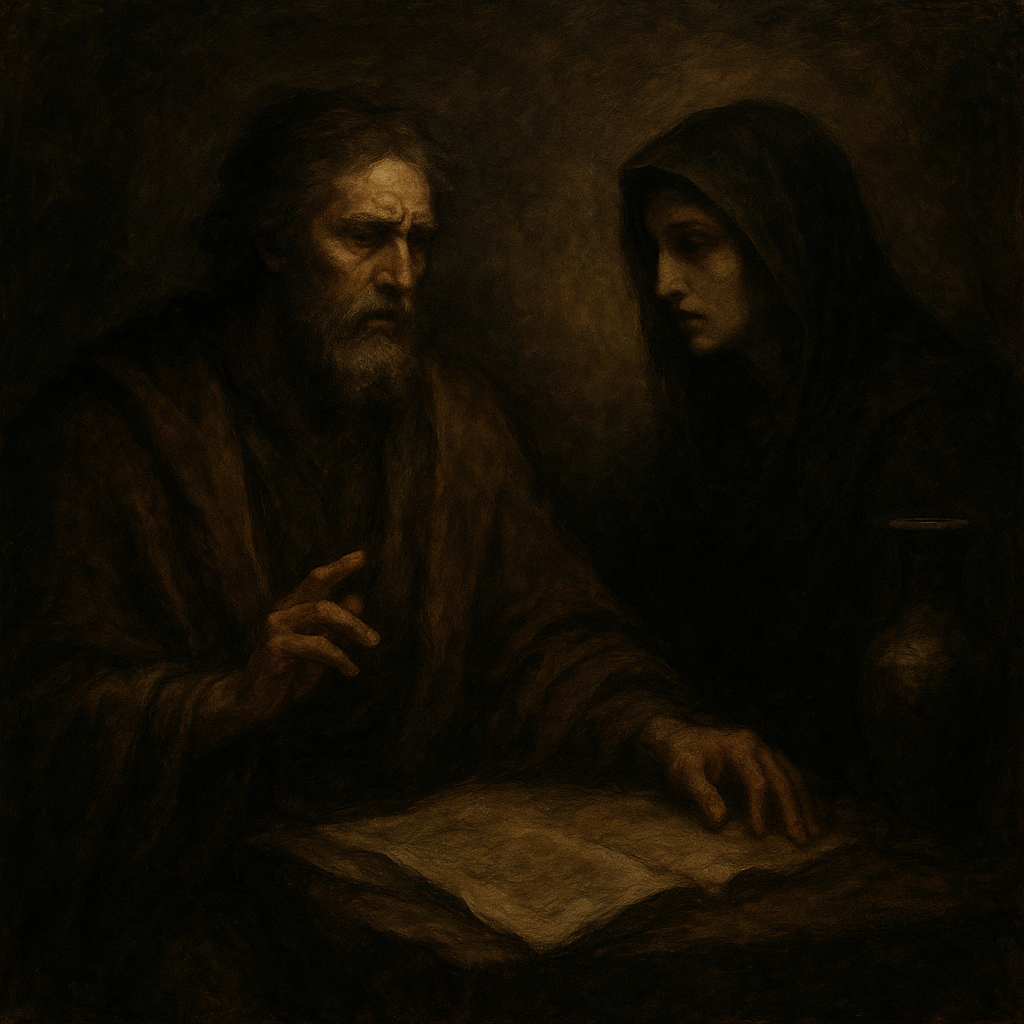
Hosea names it twice. In 4:12, the spirit of whoredoms causes God’s people to err and leads them away from Him.
Term: Ruach Zenunim (רוּחַ זְנוּנִים). Hebrew for “spirit of whoredoms,” found in Hosea 4:12 and 5:4. It describes a driving force behind Israel’s unfaithfulness to God, expressed as both spiritual idolatry and literal immorality.
What Is the Spirit of Whoredoms in the Bible?
Hosea names it twice. In 4:12, the spirit of whoredoms causes God’s people to err and leads them away from Him. In 5:4, that same spirit sits in the middle of the nation, keeping them from turning back. That is the entire biblical footprint of the phrase, two verses, one prophet, one specific historical audience.
What Hosea Actually Says
Hosea’s own marriage carries the weight of the book. God tells him to marry a woman given to unfaithfulness, and that marriage becomes a living picture of Israel’s relationship with God. The nation had turned to idols the way an unfaithful spouse turns to other lovers. “Whoredom” in Hosea is covenant language before it is sexual language. The spirit of whoredoms is what drives that covenant betrayal, pulling the nation toward false gods and away from the one they were bound to.
Nothing in the text names a specific class of individual demon behind personal lust. Nothing describes an entity that attaches itself to a person’s body or bloodline. The phrase describes a national condition, not a checklist of spirits to identify and expel one at a time.
Where Deliverance Teaching Goes Further
Modern deliverance ministry took that single phrase and built a much larger structure on top of it over the course of the twentieth and twenty-first centuries. Three additions show up constantly: incubus and succubus spirits, the idea of a “spirit spouse,” and inherited curses of lust passed down a family line. None of the three come from Hosea, and none of the three come from the Hebrew text at all.
Incubus and succubus are medieval European terms, developed in Latin Christian demonology centuries after Hosea was written, describing spirits believed to have sexual contact with sleeping victims. They entered Christian tradition through folklore and later witch-hunt literature, not through the Hebrew prophets.
“Spirit spouse” is newer still, a term used heavily in modern African and Western deliverance circles to describe a demonic entity that forms an illegitimate spiritual and sexual bond with a person, often blamed for singleness, failed marriages, or recurring sexual sin. It has no equivalent term or concept in the Hebrew text.
Generational curses of lust usually trace back to Exodus 20:5, where God describes visiting the iniquity of the fathers on the children of those who hate Him. That verse addresses idolatry in general terms across generations. It does not name lust specifically, and it does not describe a named spirit passed down a bloodline that has to be individually renounced.
Folk Theology Layered on a Short Phrase
None of this makes the modern teaching worthless. People do struggle with lasting, repeated patterns of sexual sin, and pastors and counselors have spent decades trying to name and address that reality. But naming something incubus, succubus, or spirit spouse is a tradition built by that ministry practice, not a translation of what Hosea wrote. It is accumulated folk theology, layered onto two verses across hundreds of years, and it deserves to be labeled that way rather than presented as a direct reading of the Hebrew text.
Lust the Deceiver
This same distinction, between what Scripture names and what tradition adds, runs through The Serpent’s Deception, Book Two of Sons of the Flood: The Deliverance Chronicles. Its subtitle is Lust, the Deceiver, and its cover line reads, “I always want what I don’t have.” The book works through the same ground covered here: where the spirit of whoredoms actually appears in the text. Centuries of deliverance practice have taught this model.
CK Quarterman. C. K. Quarterman is a retired entrepreneur, author, and researcher who spent decades building and operating companies in the computer and telecommunications industries before turning to the questions that had fascinated him his whole life. He writes about ancient civilizations, biblical mysteries, and unexplained phenomena, combining historical investigation with storytelling that pushes readers to examine the evidence for themselves. His research is grounded in decades of pastoral counseling and a decade of hands‑on ministry work: four years serving the homeless and people battling addiction, three years pastoring a congregation, and three years running a deliverance ministry that worked with people by phone and Skype, people who had nowhere else to turn.
Topics
Related CKQ Book
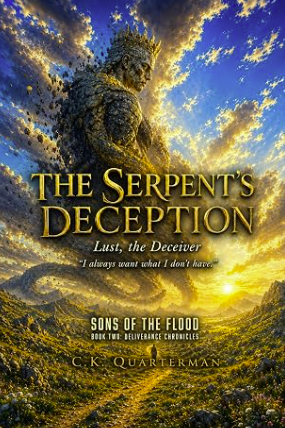
Sons of the Flood — Book Two: The Deliverance Chronicles
The Serpent's Deception
Lust, the Deceiver
Explore in the Encyclopedia
Se’irim
Goat-form spirit beings named in four passages of the Hebrew Bible. Israel was forbidden to sacrifice to them, and they are described as inhabiting wilderness and ruins.
Shedim
Shedim are spirit beings mentioned twice in the Hebrew Bible to whom Israel offered sacrifices, including child sacrifice; the biblical text treats them as demonic.
Keep researching. Don't miss what's uncovered next.
Get first access to new Encyclopedia entries, Timeline updates, Watchers, Nephilim, Giants, Demons, Deliverance, and UFO/UAP research, plus new books and releases from CKQBooks. Free. Takes ten seconds.