
Shedim
Also known as: shed, devils, demons
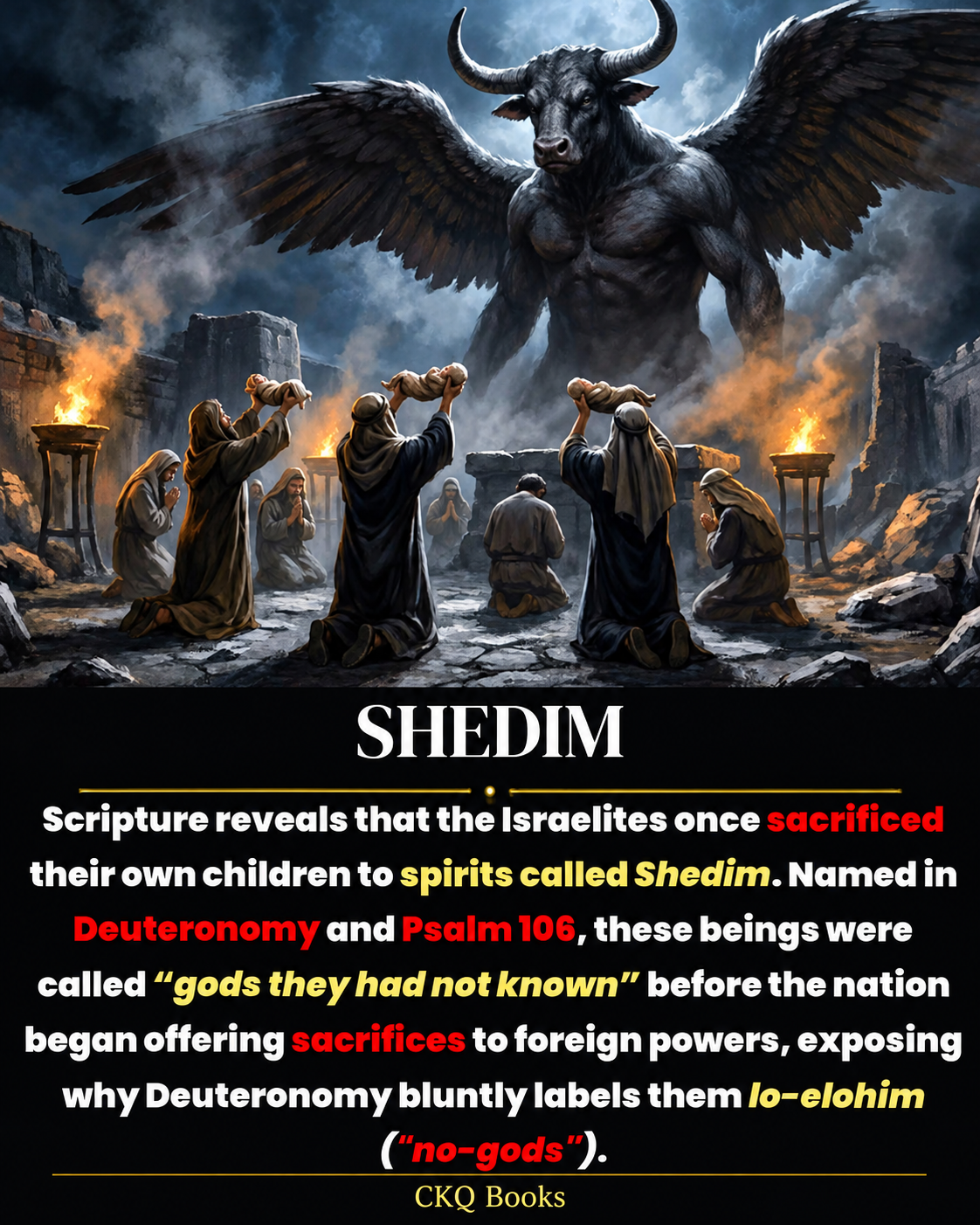
Shedim are spirit beings mentioned twice in the Hebrew Bible to whom Israel offered sacrifices, including child sacrifice; the biblical text treats them as demonic.
Term: Shedim (singular shed): spirit beings the Hebrew Bible says Israel sacrificed to in place of God. The Bible treats them as demonic, and later Jewish and Christian writers call them demons.
## What Are the Shedim?
The shedim are spirit beings that Israel worshiped with sacrifice. The word appears only twice in the Hebrew Bible. Both passages describe Israel’s idolatry, and both treat the shedim as real beings behind it, not as harmless names.
## Where the Bible Names Them
Deuteronomy 32:17. Moses says Israel sacrificed to shedim, “not God,” to gods they had not known, new ones that had recently come up. The verse says the shedim are not God. It does not say they are nothing.
Psalm 106:37. The psalmist says Israel sacrificed its sons and daughters to the shedim. The next verse ties this to the idols of Canaan. The psalm records child sacrifice offered to these beings.
## Where the Word Comes From
Most scholars connect shed to the Akkadian word shedu, which names a powerful spirit in Mesopotamian belief. In Mesopotamia a shedu could protect a house or a king, and it could also harm. The Hebrew Bible uses the word only in the negative sense. It gives no good shedim.
## How Ancient Translators Read the Word
The Greek Old Testament renders shedim with daimonia, the Greek word for demons, in both passages. Paul draws on Deuteronomy 32:17 in 1 Corinthians 10:20, where he says pagan sacrifices are offered to demons and not to God. The King James Version translates shedim as “devils” in both places.
## Shedim in Later Jewish Tradition
Rabbinic writings treat the shedim as a broad class of harmful spirits. The Talmud (Hagigah 16a) says they share three traits with angels and three with humans. Like angels, they have wings, know the future, and travel quickly. Like humans, they eat and drink, reproduce, and die. Pirkei Avot 5:6 places the creation of these spirits at twilight on the first Sabbath eve. These are later traditions. The Hebrew Bible does not say any of this.
## How the Shedim Relate to the Se’irim
The se’irim are a separate Hebrew term for “hairy ones,” goat-like spirit beings tied to ruins and wilderness places (Leviticus 17:7; 2 Chronicles 11:15; Isaiah 13:21). The text never equates the two words. Later tradition often places the se’irim inside the wider class of shedim. That is an inference from later usage, not a statement of the biblical text.
## Deuteronomy 32 and the Nations’ Gods
Deuteronomy 32:17 sits near verses 8 and 9, which speak of the nations being assigned to divine beings. The Dead Sea Scroll text of verse 8 reads “sons of God,” and the Greek text reads “angels of God” in many manuscripts, where the traditional Hebrew text reads “sons of Israel.” Scholars who read verse 17 alongside verse 8 conclude that the shedim are the spiritual powers behind the gods of the nations. Others read verse 17 as a polemic that labels foreign gods as lesser beings. The text allows both readings.
## Summary
The shedim are spirit beings, named twice in the Hebrew Bible, to whom Israel offered sacrifice, including its children. The Bible treats them as demonic. Greek translators called them demons, Paul said pagan sacrifices go to demons, and the rabbis built a detailed teaching on them.
Scripture References
Sources
Biblical TextDeuteronomy 32:17; Psalm 106:37; 1 Corinthians 10:20; Talmud (Hagigah 16a); Pirkei Avot 5:6; Leviticus 17:7; 2 Chronicles 11:15; Isaiah 13:21; Dead Sea Scrolls (Deuteronomy 32:8)
Keep researching. Don't miss what's uncovered next.
Get first access to new Encyclopedia entries, Timeline updates, Watchers, Nephilim, Giants, Demons, Deliverance, and UFO/UAP research, plus new books and releases from CKQBooks. Free. Takes ten seconds.