
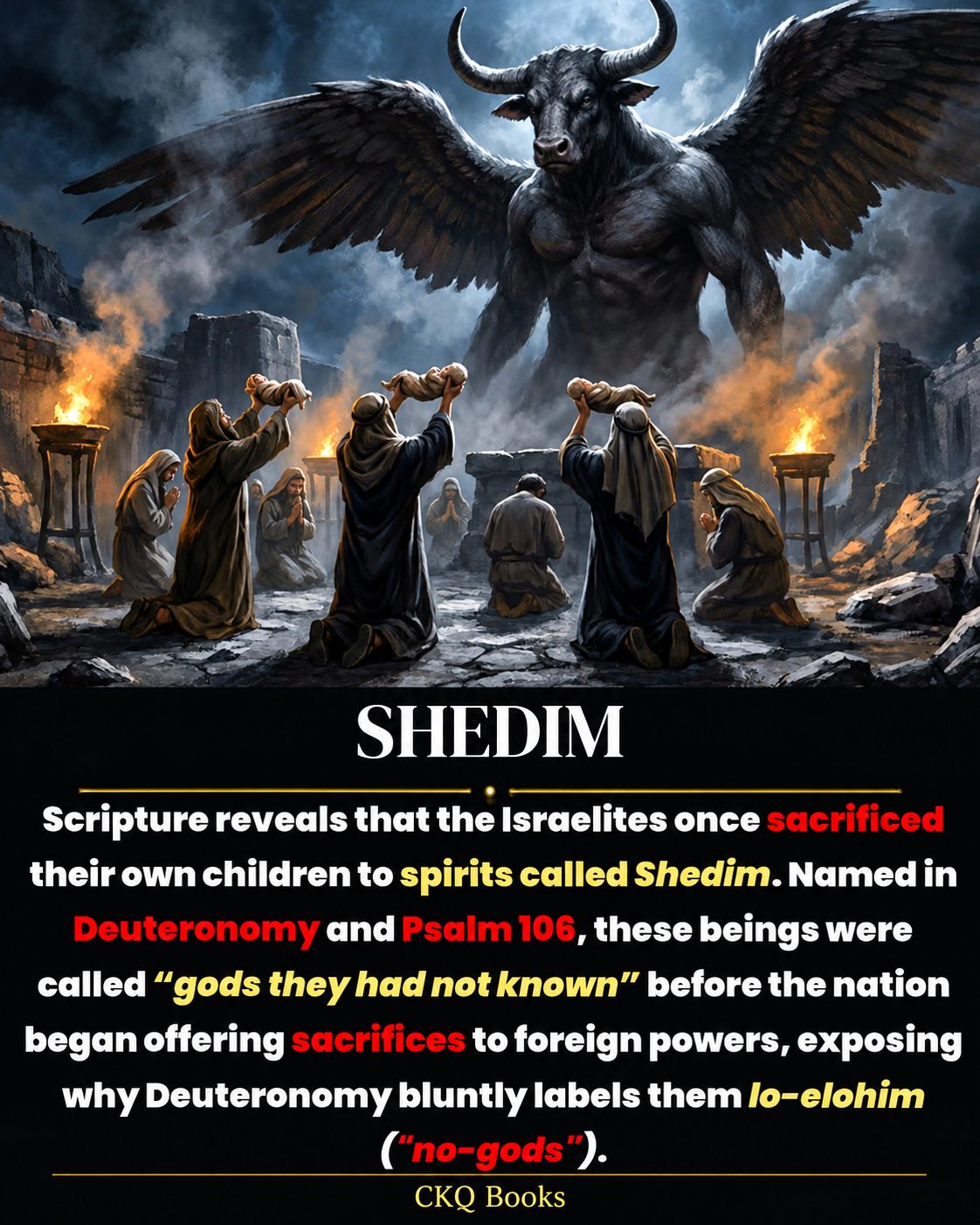
This post explains the biblical differences between the Hebrew terms se’irim and shedim, showing they are distinct spirit beings and how later tradition connects them.
Term: Shedim (singular shed): spirit beings the Hebrew Bible says Israel sacrificed to in place of God (Deuteronomy 32:17; Psalm 106:37).
Term: Se’irim (singular sa’ir): “hairy ones,” goat‑like spirit beings the Hebrew Bible says Israel sacrificed to (Leviticus 17:7; 2 Chronicles 11:15) and that inhabit ruins and wilderness places (Isaiah 13:21; 34:14). The same Hebrew word also means a male goat.
Are the Se’irim and the Shedim the Same Thing in Ancient Israel?
No. They are two different Hebrew words used in different passages, and the text never says they are the same thing. Se’irim describes beings by their hairy, goat‑like form and their homes in ruins and wilderness. Shedim describes beings by what Israel did with them: it sacrificed to them in place of God. Later Jewish and Christian writers often treated the se’irim as one kind of shed, so the two overlap in tradition. That overlap is an inference from later usage. It is not a statement of the biblical text.
What the Bible Says About the Se’irim
Sa’ir is the ordinary Hebrew word for a male goat, and it also means “hairy.” In four passages the plural, se’irim, names beings and not animals.
Leviticus 17:7. Israel is told to stop sacrificing to the se’irim, “after whom they have played the harlot.” The setting is Leviticus 17:5, where Israelites were offering sacrifices in the open field instead of bringing them to the tent of meeting. The law treats the open‑field sacrifices as worship of the se’irim.
2 Chronicles 11:15. Jeroboam appoints priests for the high places, for the se’irim, and for the calves he made. The se’irim appear next to the calf idols as objects of worship Jeroboam set up.
Isaiah 13:21 and 34:14. In the future ruins of Babylon and Edom, the se’irim dance and call to one another. Both passages place them in empty, destroyed places.
The King James Version translates se’irim as “devils” in Leviticus and 2 Chronicles and as “satyrs” in Isaiah. The Greek Old Testament does not translate them one way. In Leviticus 17:7 and 2 Chronicles 11:15 the Greek uses a word meaning “vain things.” In Isaiah 13:21 the Greek uses daimonia, the word for demons.
What the Bible Says About the Shedim
Shedim appears only twice.
Deuteronomy 32:17. Israel sacrificed to shedim, “not God,” to gods they had not known, new ones that had recently come up.
Psalm 106:37. Israel sacrificed its sons and daughters to the shedim. The next verse links this to the idols of Canaan.
Most scholars connect shed to the Akkadian word shedu, a powerful spirit that Mesopotamians believed could protect or harm. The Hebrew Bible uses the word only for the harmful kind. Here the Greek Old Testament is consistent. It translates shedim as daimonia in both passages, and Paul draws on Deuteronomy 32:17 when he writes in 1 Corinthians 10:20 that pagan sacrifices go to demons.
Where the Two Terms Overlap
Both words name spirit beings that received sacrifice. Both sets of passages treat that worship as a betrayal of God. In each case the text says the sacrifices went to something real, and it does not call them harmless. Leviticus 17:7 and Deuteronomy 32:17 also point to the same kind of sin, which is offering sacrifice to spiritual beings other than the Lord.
Where They Differ
The two words answer different questions. Se’irim tells you what the beings look like and where they live. Shedim tells you what they receive and what they are not: God. Se’irim is linked to the field, the wilderness, and ruins. Shedim is linked to foreign gods and child sacrifice. No verse uses both words together, and no verse says one is the other.
How Later Tradition Connected Them
Rabbinic writings use shedim as a broad class of harmful spirits. The Talmud (Hagigah 16a) says they share three traits with angels and three with humans. They have wings, know the future, and travel quickly, as angels do. They eat and drink, reproduce, and die, as humans do. Because the se’irim are also harmful spirit beings, later readers placed them inside this wider class. The King James Version also uses “devils” for both words, which reflects the same grouping.
The Azazel ritual in Leviticus 16 uses the same word, sa’ir, for the goat sent into the wilderness. Second Temple writings such as 1 Enoch tie Azazel to the fallen spirits. The Hebrew text of Leviticus 16 does not tie Azazel to the se’irim, so treat that link as later interpretation.
What Scholars Dispute
Some scholars see the se’irim as local goat‑shaped cult figures from the ancient Near East, and they argue the biblical writers placed them under the label of demons to condemn the cults. Others read the two words as the same spiritual reality described two ways: se’irim by appearance and shedim by function. A third group holds that the text names two separate kinds of beings and goes no further. The text supports the first and third readings more directly. The second reading rests on later usage.
Deuteronomy 32:17 raises one more question. Verses 8 and 9 speak of the nations being assigned to divine beings. The Dead Sea Scroll text of verse 8 reads “sons of God,” and the Greek text reads “angels of God” in many manuscripts, where the traditional Hebrew text reads “sons of Israel.” Some scholars read the shedim as those same powers over the nations. Others read verse 17 as a label for foreign gods and nothing more.
Conclusion
The se’irim and the shedim are not the same thing in the Hebrew text. They are different words in different passages, and no verse equates them. They share the same setting, which is Israel sacrificing to spirit beings in place of God. A reasonable reading is that the se’irim are a kind of shed. The Greek Old Testament, Paul, and the rabbis lean that way. Treat it as a well‑supported inference from later tradition, and not as something the Hebrew Bible states.
For a fuller treatment of the se’irim as the wilderness goat demons, see the Malaterrestrials book Fallen Angels & Malaterrestrials by CK Quarterman.
Topics
Explore in the Encyclopedia
Malaterrestrials
A term coined by C. K. Quarterman for evil, earthbound non-human intelligences. It is a proposed framework, not an accepted scientific category.
Se’irim
Goat-form spirit beings named in four passages of the Hebrew Bible. Israel was forbidden to sacrifice to them, and they are described as inhabiting wilderness and ruins.
Shedim
Shedim are spirit beings mentioned twice in the Hebrew Bible to whom Israel offered sacrifices, including child sacrifice; the biblical text treats them as demonic.
Keep researching. Don't miss what's uncovered next.
Get first access to new Encyclopedia entries, Timeline updates, Watchers, Nephilim, Giants, Demons, Deliverance, and UFO/UAP research, plus new books and releases from CKQBooks. Free. Takes ten seconds.