
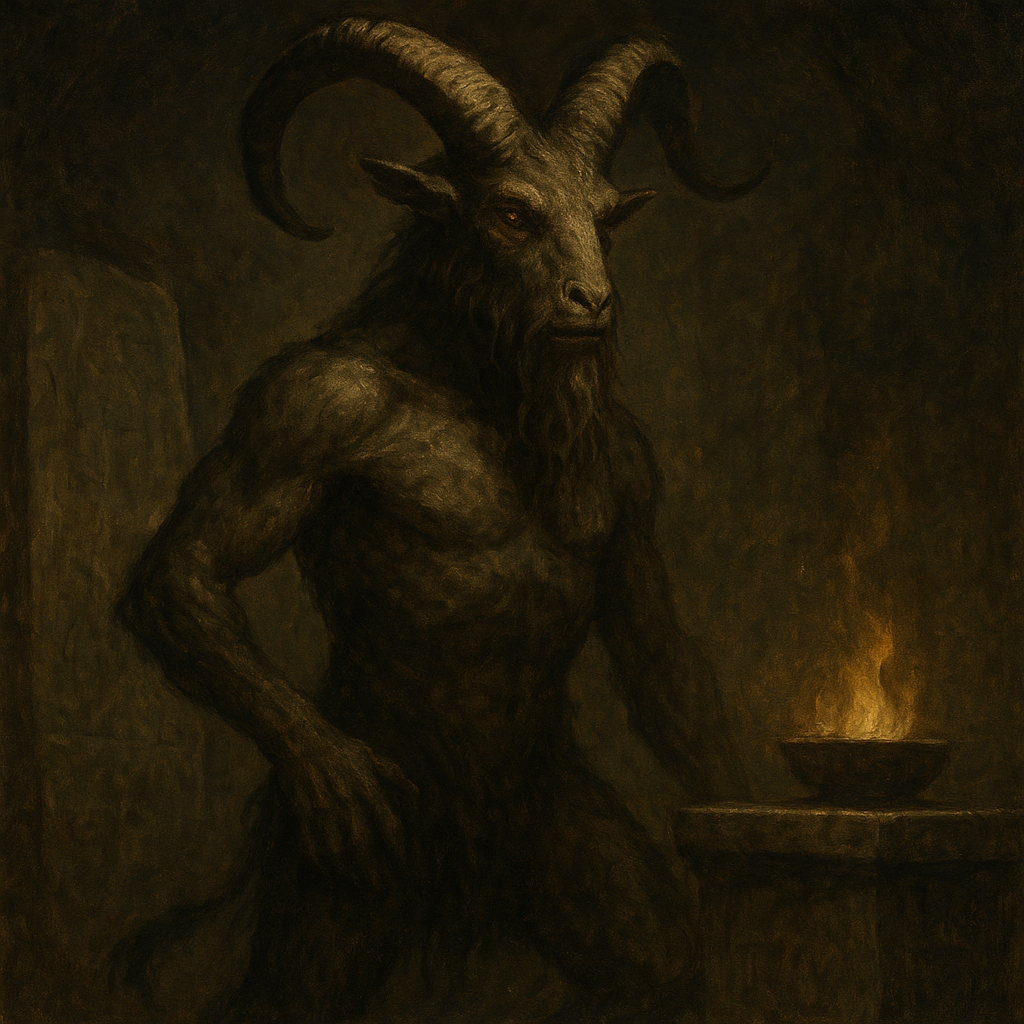
Se’irim
Also known as: sa’ir, goat demons, satyrs, hairy ones
Goat-form spirit beings named in four passages of the Hebrew Bible. Israel was forbidden to sacrifice to them, and they are described as inhabiting wilderness and ruins.
Se’irim is the plural of the Hebrew sa’ir, meaning hairy one or male goat. The same word names the two ordinary goats of the Day of Atonement in Leviticus 16:8, so context decides whether it means an animal or a spirit.
Leviticus 17:7 forbids Israel to sacrifice any longer to the se’irim, after whom they went whoring. Second Chronicles 11:15 says Jeroboam appointed priests for the high places, the se’irim, and the calves he made. Isaiah 13:21 has se’irim dancing in the ruins of Babylon, and Isaiah 34:14 has them calling to one another in the ruins of Edom.
English translations obscure the connection. The King James Version renders the word devils in Leviticus 17:7 and satyrs in Isaiah 13:21; versions such as the NASB use goat demons in both places.
The King James Version translates se’irim as “devils” in Leviticus and 2 Chronicles and as “satyrs” in Isaiah. The Greek Old Testament does not translate them one way. In Leviticus 17:7 and 2 Chronicles 11:15 the Greek uses a word meaning “vain things.” In Isaiah 13:21 the Greek uses daimonia, the word for demons.
Rashi and Ibn Ezra read the word as demons. Ibn Ezra adds that they were so called because the insane see them in the form of goats, and reads Leviticus 17:7 as evidence that Israel sacrificed to them in Egypt. The Zohar describes evil beings gathering at Egyptian field sacrifices and appearing hairy. The Targums, the Peshitta, and the Vulgate also understand the word as demons.
Isaiah 13:21 and 34:14. In the future ruins of Babylon and Edom, the se’irim dance and call to one another. Both passages place them in empty, destroyed places.
Ibn Ezra’s note on Leviticus 16:8, that the secret of Azazel becomes clear at thirty-three, was explained by Ramban as pointing 33 verses ahead to Leviticus 17:7. Ramban states that the scapegoat was not an offering to Azazel.
Jerome’s Life of Paul the First Hermit (late fourth century) describes Anthony meeting a satyr in the Egyptian desert. The account is hagiography, but it shows that fourth-century Christians treated such beings as real inhabitants of the desert.
First Enoch 15:8-12 describes the spirits of the giants as evil spirits dwelling on the earth, but it does not name the se’irim. Linking the two is an interpretation rather than a statement of any single text.
Topics
Scripture References
Sources
Rashi and Ibn Ezra on Leviticus 17:7. Ramban on Leviticus 16:8. Zohar. Jerome, Life of Paul the First Hermit. 1 Enoch 15:8-12. Catholic Encyclopedia, on Jerome’s satyr account. King James Version translates se’irim as “devils” in Leviticus and 2 Chronicles and as “satyrs” in Isaiah. The Targums, the Peshitta, and the Vulgate also understand the word as demons.
Keep researching. Don't miss what's uncovered next.
Get first access to new Encyclopedia entries, Timeline updates, Watchers, Nephilim, Giants, Demons, Deliverance, and UFO/UAP research, plus new books and releases from CKQBooks. Free. Takes ten seconds.