
Nephilim
Also known as: giants
The Nephilim are the powerful, giant figures mentioned in Genesis 6:4 and Numbers 13:33, whose name is linked to the Hebrew verb “to fall” and has been interpreted as “giants” in ancient texts.
Nephilim: The Hebrew name for the powerful, giant figures named in Genesis 6:4 and Numbers 13:33. The name is often linked to the verb naphal, “to fall,” and is rendered “giants” in the Septuagint and the King James Version.
Sons of God (bene ha-elohim): The Hebrew phrase in Genesis 6:2 and 6:4. Elsewhere in the Old Testament it names heavenly beings, and many ancient readers took it to mean angels in Genesis 6.
Watchers: A term for angelic beings used in Daniel 4:13 and, in the Book of Enoch, for the angels who descended to earth and took human wives.
Keywords: who were the Nephilim, Nephilim in the Bible, sons of God Genesis 6, Nephilim giants, Watchers, Book of Enoch, Anakim
## Who Were the Nephilim?
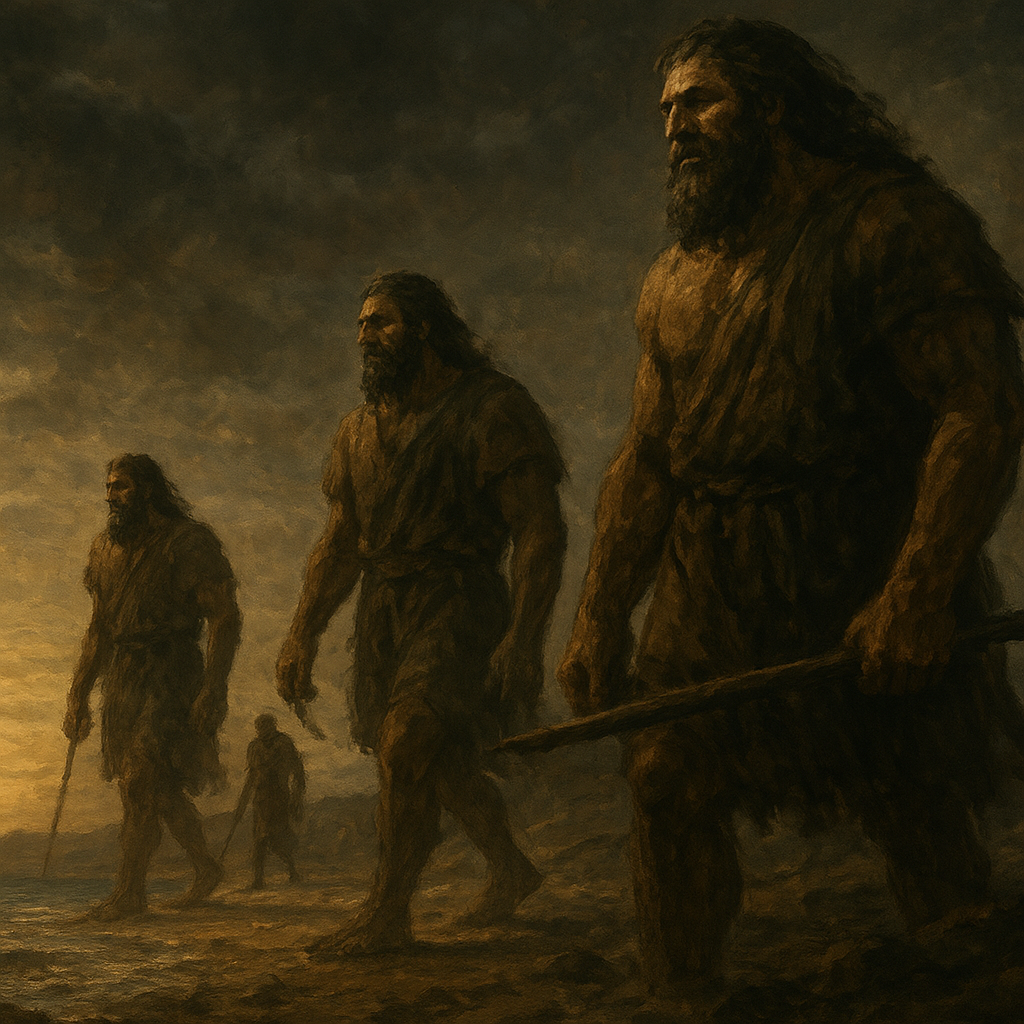
The Nephilim were the giant, powerful figures named in Genesis 6:4 and Numbers 13:33. Genesis places them on the earth before the Flood and says they were there “also after that” [1]. Many ancient Jewish and early Christian writers taught that they were the children of angels, called the sons of God, and human women [9][11][13]. Other readers hold that the sons of God were the godly line of Seth, or that they were ancient kings [15][19].
The Bible does not explain their origin in one plain sentence. That is why the debate has run for more than two thousand years. This post covers what the text says, what the name means, the three main interpretations, and the ancient sources behind each one. Numbers in brackets point to the source list at the end.
## What the Bible Says About the Nephilim
The Hebrew Bible uses the word Nephilim twice, in Genesis 6:4 and Numbers 13:33 [1][3]. Genesis 6:2 introduces the central event: “the sons of God saw the daughters of men that they were fair; and they took them wives of all which they chose.” Verse 4 continues: “There were giants in the earth in those days; and also after that, when the sons of God came in unto the daughters of men, and they bare children to them, the same became mighty men which were of old, men of renown” (KJV) [1].
Most readers treat the Nephilim and the “mighty men” (Hebrew gibborim) as the same offspring. The verse does not join them in a single clause, and some commentators point this out [21]. The King James Version translates Nephilim as “giants.” The Septuagint, the Greek translation made by Jewish scholars before the time of Christ, uses the Greek word gigantes [24].
In Numbers 13:33, ten of the twelve spies report on Canaan: “And there we saw the giants, the sons of Anak, which come of the giants: and we were in our own sight as grasshoppers, and so we were in their sight” (KJV) [3]. Verse 32 calls this an “evil report,” so scholars debate how much the spies exaggerated. Later passages still say the Anakim lived in the land [5].
## What Does the Name Nephilim Mean?
Most scholars link Nephilim to the Hebrew verb naphal, “to fall.” That gives the sense “fallen ones,” or those who fall upon others. Some scholars connect the word to an Aramaic term for giant. The meaning of the root is not settled, and you should treat any single translation as one proposal among several [18][21].
## Three Main Interpretations of Genesis 6:1-4
### 1. The Angelic View
In this reading, the sons of God were angelic beings who took human women as wives. The phrase bene ha-elohim appears in Job 1:6, 2:1 and 38:7, where it names heavenly beings. Job 38:7 says the sons of God shouted for joy when the earth was founded, so they existed before humans did [2].
This was the dominant reading in the oldest surviving Jewish writings. The Book of the Watchers (1 Enoch 6 to 16), written about the third century BC and found in Aramaic fragments at Qumran, describes 200 angels who descended and took wives [9]. Jubilees 5:1 tells the same story [10]. The first‑century historian Josephus wrote that “angels of God” joined with women and fathered violent sons [11]. The Jewish philosopher Philo also read the passage as a reference to angels [12]. Some Septuagint manuscripts, including Codex Alexandrinus, read “angels of God” in Genesis 6:2 [24].
Early Christian writers followed this reading. Justin Martyr and Tertullian both taught that angels fell through desire for women [13][14]. In the New Testament, Jude 6‑7 says angels “kept not their first estate, but left their own habitation,” and compares their sin to Sodom, where people went “after strange flesh.” Second Peter 2:4 says God did not spare the angels who sinned. Jude 14‑15 also quotes 1 Enoch [7].
The main objection comes from Matthew 22:30, where Jesus says that in the resurrection people “neither marry, nor are given in marriage, but are as the angels of God in heaven” [8]. Supporters of the angelic view answer that Jesus describes angels in heaven and says nothing about angels who left their place. Jude 6 describes exactly that departure [7].
### 2. The Sethite View
In this reading, the sons of God were men from the line of Seth, who worshiped God, and the daughters of men were women from the line of Cain. Augustine gave this view its most influential form in City of God 15.23, and it became the common reading in the church after the fourth century [15].
Its supporters point to Israel being called God’s sons in passages such as Deuteronomy 14:1 and Hosea 1:10, and to Jesus’s statement in Matthew 22:30. The objections are also well known. Genesis never calls Seth’s line “sons of God.” The phrase “daughters of men” in 6:1 simply means human women. The view also has to explain why the children of ordinary marriages would be “mighty men” and giants, and why Job uses the same phrase for heavenly beings [2][21].
### 3. The Dynastic or Royal View
In this reading, the sons of God were rulers or nobles who built harems from women they chose. The Aramaic Targum Onkelos renders the phrase “sons of the nobles.” Genesis Rabbah 26:5 records Rabbi Shimon bar Yochai cursing anyone who called them sons of God [16]. In modern scholarship, Meredith Kline argued that ancient Near Eastern kings were described as sons of gods, which would fit a story about royal abuse of power [19].
Critics reply that no text in Genesis calls human kings “sons of God.” They also say this view does not account for the giants or for the heavenly meaning of the phrase in Job [2][17][18].
## Were There Nephilim After the Flood?
Genesis 6:4 says the Nephilim lived “in those days; and also after that.” Numbers 13:33 calls the sons of Anak descendants of the Nephilim [3]. Deuteronomy 2:10-11 and 2:20-21 describe the Emim and the Zamzummim as peoples of great size, also called Rephaim [4]. Deuteronomy 3:11 says the bed of Og, king of Bashan, was nine cubits long, which is about thirteen feet [4]. Joshua 11:21-22 says Joshua cut off the Anakim from the hill country, and that some remained in Gaza, Gath and Ashdod [5]. Goliath of Gath is listed at “six cubits and a span” in the Hebrew text of 1 Samuel 17:4, and at “four cubits and a span” in the Septuagint and a Dead Sea Scrolls copy of Samuel [6].
Readers differ on how any Nephilim lines continued after the Flood. Some take the words “and also after that” as a second occurrence of the same event. Others treat the Numbers 13 report as the spies’ own claim. The text does not settle the question.
## What Do Non‑Biblical Sources Say?
The Dead Sea Scrolls include fragments of a Book of Giants that expands the story of the giants and their dreams [17]. First Enoch 15 teaches that the spirits of the dead giants became evil spirits on the earth [9]. Annette Yoshiko Reed traces how Jewish and Christian writers handled this tradition over several centuries [20]. If you want to read these texts yourself, start with 1 Enoch 6 to 16 and Jubilees 5, then compare them with Genesis 6.
## Summary: CKQ Books Interpretation
CKQ Books interpretation: The sons of God in Genesis 6:2 and 6:4 were angels. They took earthly women as wives, and the children born from those unions were the Nephilim, the giants of the ancient world.
Four points support this reading. First, bene ha‑elohim names heavenly beings in Job [2]. Second, the oldest surviving Jewish readings, including 1 Enoch, Jubilees, Josephus and some Septuagint manuscripts, understood the passage this way [9][10][11][24]. Third, Jude 6‑7 and 2 Peter 2:4 link angels who left their place with sexual sin and judgment [7]. Fourth, Jesus speaks in Matthew 22:30 about angels in heaven, while Jude describes angels who left their habitation [7][8].
The Sethite and royal views read the same verses and reach different conclusions. You can check each source in the list below and decide for yourself.
Scripture References
Sources
Biblical TextGenesis 6:1-4; Job 1:6; Job 2:1; Job 38:7; Numbers 13:32-33; Deuteronomy 2:10-11; Deuteronomy 2:20-21; Deuteronomy 3:11; Joshua 11:21-22; 1 Samuel 17:4; 2 Samuel 21:15-22; Jude 6-7; Jude 14-15; 2 Peter 2:4; Matthew 22:30; Mark 12:25; Daniel 4:13; Daniel 4:17; Daniel 4:23; 1 Enoch 1-36; Book of Jubilees 5:1-2; Flavius Josephus, Antiquities 1.3.1; Philo, On the Giants; Justin Martyr, Second Apology 5; Tertullian, On the Apparel of Women 1.2; Augustine, City of God 15.23; Genesis Rabbah 26:5; Loren T. Stuckenbruck, The Book of Giants from Qumran; Ronald S. Hendel, “Of Demigods and the Deluge”; Meredith G. Kline, “Divine Kingship and Genesis 6:1-4”; Annette Yoshiko Reed, Fallen Angels and the History of Judaism and Christianity; Michael S. Heiser, The Unseen Realm.
Keep researching. Don't miss what's uncovered next.
Get first access to new Encyclopedia entries, Timeline updates, Watchers, Nephilim, Giants, Demons, Deliverance, and UFO/UAP research, plus new books and releases from CKQBooks. Free. Takes ten seconds.