
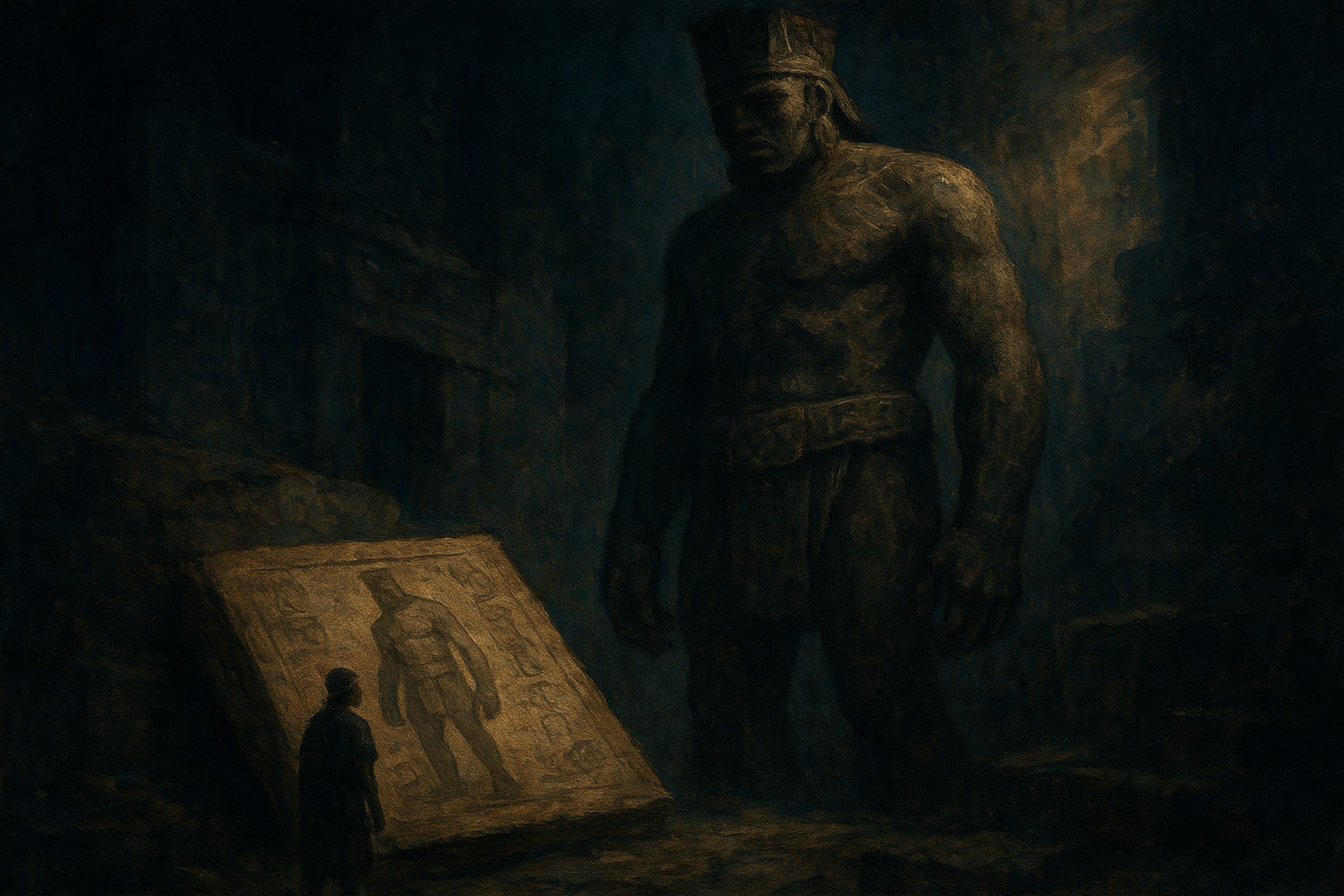
Aztec tradition mentions the Quinametzin, giants of a former age, but the Codex Ríos illustration is unverified. Learn the view and its link to biblical giants.
Did the Aztecs Believe in Giants? Yes. Aztec tradition describes giants called the Quinametzin who lived in an earlier age and were destroyed. The popular claim that the Codex Ríos shows Aztec warriors killing a giant named Quinametzin is not confirmed. I could not verify that the picture comes from the codex, and I found no source for the common translation of the name as “One of the Old Ones.”
What Is the Codex Ríos? The Codex Ríos is a 16th century manuscript written in Italian. Its illustrations were likely made by an Italian artist in Rome. Its annotations are credited to Pedro de los Ríos, a Dominican friar who worked in New Spain from 1547 to 1562. It translates and expands an earlier Aztec codex. Scholars debate which one. It may have been the Codex Telleriano-Remensis or several earlier works. The manuscript covers Aztec religion, cosmology, a 260-day divinatory calendar, an 18-month festival calendar, and pictorial chronicles. Its first section mentions pre-Hispanic giants called tzocuillixeque. The summary I read does not describe them being killed.
Who Were the Quinametzin? Aztec accounts describe the world as passing through ages, each ended by a disaster. One modern summary says the Quinametzin lived in an earlier age, that the gods destroyed them for failing to honor the gods, and that they are credited with building the pyramid at Cholula and the city of Teotihuacan. That summary rests on a single 1981 Spanish book, so treat the details with caution. The term is real. The mexicanist Juan Armenta Camacho, in a 1978 monograph quoted by Michael Heiser, says there are references to the Quinametzin, which he calls the highly respected, vanished giants, in the Mendocino Codex.
The Picture of the Giant A drawing of warriors attacking a giant is often shown with the Codex Ríos. Michael Heiser says he can't confirm it appears in the codex and suspects whoever circulated it attached the name Quinametzin to the picture. No folio number is given for it. I found no source saying the codex text next to it reads “Quinametzin,” or that the name means “One of the Old Ones.”
What the Skeptics Say • Armenta Camacho found no indigenous legend of human Quinametzin. He argued that the giant bones described in the chronicles were likely large Ice Age mammals. • Heiser notes that the drawing, if it is from the codex, lacks the perspective and anatomical realism needed to judge a figure’s height. He says it would show Indigenous people in the low to mid six-foot range at most. • The Aztec creation story is a religious account of earlier ages. It does not prove that giants lived in Mexico.
My View I believe the Nephilim in Genesis 6:4 and the sons of Anak in Numbers 13:33 were real, and that giant traditions in many cultures are consistent with that account. That is my reading of Scripture. For more on the giants of Scripture, read The Watchers Fallen. For fiction built on the same subject, see The Giant’s Shadow: Pride the Destroyer, Book One of Sons of the Flood: The Deliverance Chronicles.
Related CKQ Book
The Watchers Series — Book One
The Watchers Fallen
They Were Not Supposed to Walk Among Us
Explore in the Encyclopedia
Anakim
A clan of giants dwelling in Canaan, descended from Anak, feared by the Israelite spies.
Rephaim
An ancient people of giant stature east of the Jordan, of whom King Og of Bashan was the last remnant.
Giants
A general term for the oversized clans and warriors of the ancient world tied to the Nephilim bloodline.
Elioud
The third generation of giant hybrids in Second Temple Jewish literature, descended from the Watchers through the great giants and the Naphil.
Fallen Watchers
The Fallen Watchers are the two‑hundred angels described in 1 Enoch who descended on Mount Hermon, swore an oath to take human wives, and taught humanity forbidden skills, led by Semjaza with Azazel receiving the greatest blame.
Nephilim
The Nephilim are the powerful, giant figures mentioned in Genesis 6:4 and Numbers 13:33, whose name is linked to the Hebrew verb “to fall” and has been interpreted as “giants” in ancient texts.
Towns, cities or locations that were said to have had giants in them.
These cities and locations show evidence in the text of the Old Testament that they were home to the giants.
Keep researching. Don't miss what's uncovered next.
Get first access to new Encyclopedia entries, Timeline updates, Watchers, Nephilim, Giants, Demons, Deliverance, and UFO/UAP research, plus new books and releases from CKQBooks. Free. Takes ten seconds.