

The article compares the Arabic jinn with the biblical se’irim, arguing they are the same class of evil, earth‑bound spirits linked to the Nephilim.
Jinn: In Arabic tradition, jinn (singular jinni) are unseen spirits described as made from smokeless fire. The word comes from an Arabic root meaning to hide or conceal. English speakers call them genies.
Se’irim: The se’irim (pronounced seh-ee-REEM) are the “hairy ones” or goat demons of the Hebrew Bible. They are linked to ruins, wilderness places, and forbidden sacrifice in Leviticus 17:7, 2 Chronicles 11:15, Isaiah 13:21, and Isaiah 34:14.
Malaterrestrials: Malaterrestrials are evil, earthbound, non-human intelligences. The term separates them from extraterrestrials and from the holy angels of heaven.
[Insert genie image here]
The image with this post comes from a vision I had this morning. It shows a genie. The Arabic word behind that English name is jinn, and the jinn are spirits. The Bible describes spirits like them, and I have written about them before.
Are Genies Real?
The genie who lives in a lamp and grants three wishes is folklore. The spirits behind the stories are a different matter. Islamic tradition treats jinn as real beings, and the Bible describes wilderness spirits that match them closely. The Bible never uses the word jinn. It uses the word se’irim, and it warns people to stay away from them.
What Is a Jinn?
The Arabic word jinn comes from a root meaning to hide or conceal. The jinn are the hidden ones. The Quran says God made them from smokeless fire (Surah 55:15) and that some are believers and some are not. Islamic tradition places them apart from both humans and angels.
The English word genie came later. French translator Antoine Galland used the word génie in his early eighteenth‑century translation of the Arabian Nights. It comes from the Latin genius, a guardian spirit, and it sounded close to the Arabic. The word stuck, and the meaning drifted from a dangerous spirit to a friendly servant.
Where Did the Lamp and the Bottle Come From?
They came from storytelling, not from early belief. Galland added the tale of Aladdin and his lamp to the Nights after hearing it from a Syrian storyteller named Hanna Diyab. The brass bottle comes from the tale of the Fisherman and the Jinni, where a jinni is sealed in a bottle with the seal of Solomon. Later legend said Solomon bound jinn that way. The Quran says Solomon commanded jinn to work for him (Surah 34:12‑14), but it says nothing about bottles.
Where Did Traditional Jinn Live?
Traditional jinn lived in wild and empty places. Folk tradition puts them in deserts, ruins, caves, and crossroads. Pre‑Islamic Arabs feared these places after dark and asked the jinn for protection when they traveled through them. Surah 72:6 mentions men who sought refuge with the jinn, and it says this only made the jinn bolder. Islamic tradition also says jinn can take animal forms, such as snakes and black dogs.
Keep that picture in mind: a hidden spirit, a wilderness, a ruin, an animal shape, and people who try to bargain with it.
What Does the Bible Call Them?
The Hebrew word is se’irim. It comes from sa’ir, which means hairy or a male goat, so the se’irim are the hairy ones. Translators often render the word as goat demons, satyrs, or wild goats. Here is where the Bible places them.
Leviticus 17:7. Israel is told to stop sacrificing to the se’irim, after whom the people had gone whoring.
2 Chronicles 11:15. Jeroboam appoints priests for the high places and for the se’irim.
Isaiah 13:21. Babylon becomes a ruin where wild creatures live and the se’irim dance. The Septuagint, the Greek translation made before the time of Christ, renders the word here as daimonia, which means demons.
Isaiah 34:14. Edom becomes a ruin where the goat demon cries to his fellow.
Matthew 12:43. Jesus says an unclean spirit passes through dry places looking for rest.
Deuteronomy 32:17 and Psalm 106:37 add a related Hebrew word, shedim, and say Israel sacrificed to demons, not to God. In every case the setting is the same: empty land, ruined cities, and worship that belongs to God alone.
Do the Jinn and the Se’irim Match?
The two descriptions overlap at several points. Both are spirits that people do not see. Both live in wilderness and ruins. Both are tied to hairy or animal forms. Both draw people into offerings and bargains. And in both traditions, a wise person keeps away from them.
The overlap is the reason I connect them. The Arabic word jinn and the Hebrew word se’irim are not related, so the link rests on the descriptions, not on the words.
What Do Skeptics Say?
Skeptics make three fair points. First, many Bible scholars read se’irim as goat idols or wild goats, not as spirit beings. Second, Islamic scholars teach that jinn are a created race of their own, not the spirits of fallen giants, and that Iblis is counted among the jinn (Surah 18:50). Third, shared features across cultures do not prove that two traditions describe the same beings. Wilderness fear is common to many peoples. The Septuagint reading and the Deuteronomy and Psalm passages answer the first point in part, but the debate is real. The back matter of my book gives each of these objections its own entry.
My View
I believe the jinn of Arabic tradition and the se’irim of the Bible are the same class of beings. They are evil, earthbound spirits, and I call them malaterrestrials. I believe they are the spirits of the Nephilim. I believe the lamp stories turn a real danger into entertainment, because a spirit that offers favors in return for service wants a person’s loyalty. The warning of Leviticus 17:7 still stands. The answer to these spirits is deliverance in the name of Jesus Christ.
Read the Full Record
This post draws on the back matter of my book, Fallen Angels & Malaterrestrials. The book follows the record through the 200 Watchers of Mount Hermon, the Nephilim of Genesis 6, the post‑Flood giant clans, and the goat demons the prophets called se’irim. It then sets that record beside modern reports of hairy beings, shadow figures, strange lights, and wilderness disappearances. The final chapter gives practical steps for readers who face these experiences.
Fallen Angels & Malaterrestrials is available on Amazon: amazon.com/dp/B0HMSHNLD7
For fiction on the same theme, read The Giant’s Shadow, Book One of the Sons of the Flood series, where deliverance minister Nathaniel Cross faces a giant’s spirit.
Topics
Related CKQ Book
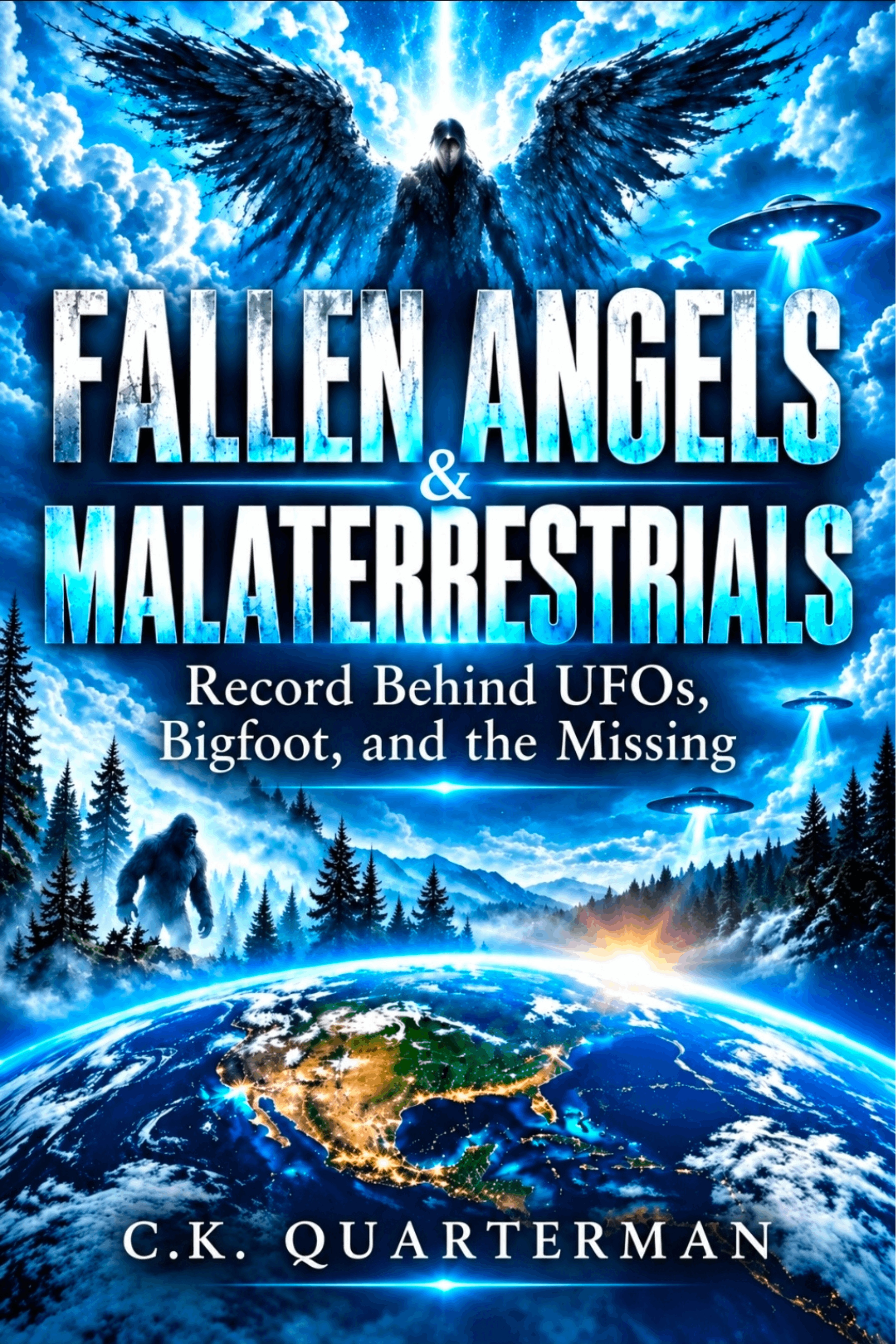
Fallen Angels & Malaterrestrials
The Ancient Record Behind UFOs, Bigfoot, and the Missing
Explore in the Encyclopedia
UFO Abductions
Are alien abductions caused by fallen angels? No one can prove it, but the Bible offers reasons to be cautious. See what the reports describe, what Scripture warns about, and what skeptics say.
Malaterrestrials
A term coined by C. K. Quarterman for evil, earthbound non-human intelligences. It is a proposed framework, not an accepted scientific category.
Lilith in the Bible
A figure named once in the Hebrew Bible, in Isaiah 34:14. Scholars debate whether the word names a female night demon or a night bird or other wild creature.
Se’irim
Goat-form spirit beings named in four passages of the Hebrew Bible. Israel was forbidden to sacrifice to them, and they are described as inhabiting wilderness and ruins.
Inanna & Ashtoreth
Inanna, the ancient Sumerian "Queen of Heaven," was later syncretised as the Akkadian Ishtar, the Canaanite Astarte/Ashtart, and finally appeared in the Hebrew Bible as the deity Ashtoreth.
Shedim
Shedim are spirit beings mentioned twice in the Hebrew Bible to whom Israel offered sacrifices, including child sacrifice; the biblical text treats them as demonic.
What Does the War Scroll Say About the Great Tribulation?
The War Scroll (1QM) is a Dead Sea Scroll fragment describing a final war between the Sons of Light and the Sons of Darkness, including language that translators render as a “great tribulation.”
Keep researching. Don't miss what's uncovered next.
Get first access to new Encyclopedia entries, Timeline updates, Watchers, Nephilim, Giants, Demons, Deliverance, and UFO/UAP research, plus new books and releases from CKQBooks. Free. Takes ten seconds.