
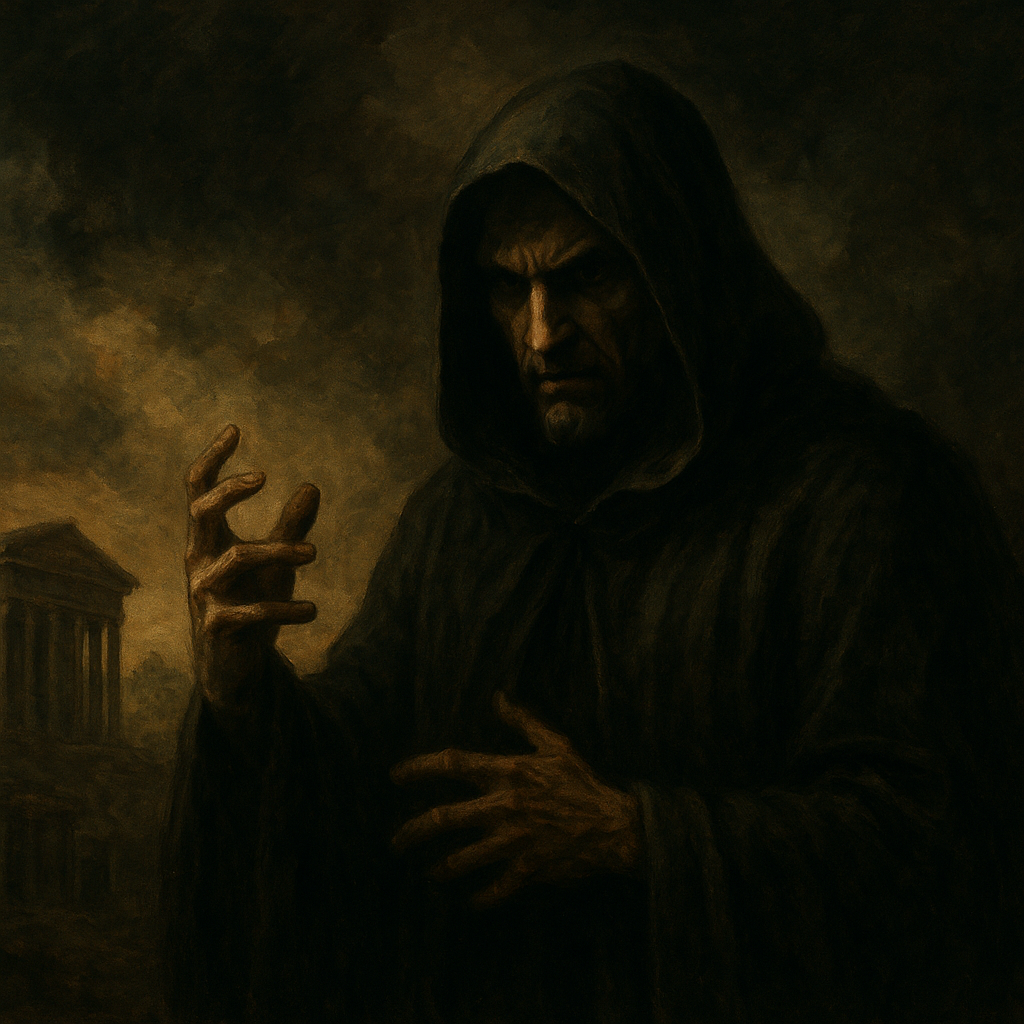
Vampires
The Bible never uses the word “vampire.” It never describes an undead creature that drinks blood. It does contain two things people connect to the legend. The first is the Alukah of Proverbs 30:15, Alukah is a Hebrew word meaning “leech” that appears once in Proverbs 30:15 and is sometimes linked by scholars to a blood‑drinking demon, while Rephaim are giants and dead spirits associated with Sheol.
## What Does the Bible Say About Vampires?
The Bible never uses the word “vampire.” It never describes an undead creature that drinks blood. It does contain two things people connect to the legend. The first is the Alukah of Proverbs 30:15, a word that means leech and that some scholars link to a blood‑drinking demon. The second is the Rephaim, a race of giants and, later in Scripture, the spirits of the dead in Sheol.
## The Alukah: A Creature That Never Says Enough
What the text says. The King James Version renders Proverbs 30:15 this way: “The horseleach hath two daughters, crying, Give, give.” [1] The Hebrew word ʿălûqâ appears only once in the Bible. [2] The Latin Vulgate translates it sanguisuga, the Latin word for leech, which literally means “blood‑sucker.” [3] The verse opens a list of things that never say “enough.” Verses 15 and 16 name four: Sheol, the barren womb, the earth that never has enough water, and fire. [1]
The Encyclopaedia Judaica says the Hebrew word may simply mean “leech.” It adds that ʿaulaq is a name for a vampire in Arabic literature, so the creature and her two daughters may be the subject of this difficult passage. [4] The standard Hebrew lexicon of Brown, Driver, and Briggs adds that Ewald and others treat the word as a “vampyre‑like demon.” [12]
Outside the Bible, a plaque from Arslan Tash in northwest Syria carries an incantation meant to keep demons out of a house. Scholars date it to the seventh century BC. [5] The plaque does not name the Alukah. It calls on gods to keep out “fliers” and “stranglers,” and some scholars read the female fliers as Lilith. That reading is tentative, because a key word is broken. [11] Scholars still debate details of its reading. Teixidor and Amiet, who examined the tablets in Aleppo, questioned their authenticity in 1983. Van Dijk defended them in 1992, and Pardee left the question open in 1998. [11] Treat it as background from the same region, not as proof of what Proverbs means.
Much later, a medieval German Jewish work called Sefer Hasidim discusses vampire‑like beings. Tradition attributes the book to Rabbi Judah the Pious of Regensburg, who died in 1217. Its passages on the estrie, a being whose name comes from the Latin strix, describe flight tied to unbound hair (sections 1465 and 1466). [6] Modern reference works apply the label alukah to this figure. They describe a living person who can turn into a wolf and who dies if she goes too long without blood. [10] The alukah label comes from those modern summaries, so treat it as a later gloss. That is medieval folklore. It shows how later readers understood the word, not what the author of Proverbs meant.
CKQ Commentary. I read the Alukah as more than a leech. The passage puts a creature that drinks next to Sheol, the womb, the earth, and fire, and it gives her daughters who cry for more. The Arabic word ʿaulaq and the later Jewish traditions show that later readers heard a demon in this word. My reading is that Proverbs 30:15 is the closest the Bible comes to describing a blood‑drinking predator whose hunger has no limit.
## The Rephaim: Giants Who Became Shades
What the text says. The Hebrew Bible uses the word Rephaim in two ways.
On earth, the Rephaim are a people. Deuteronomy 3:11 says Og, king of Bashan, was the last of the remnant of the Rephaim. His iron bed was nine cubits long, about thirteen and a half feet at eighteen inches per cubit. [1] In Genesis 14:5, a coalition of kings defeats the Rephaim at Ashteroth‑karnaim. [1] Deuteronomy 2:11 says the Rephaim were counted as giants like the Anakim, and the Moabites called them Emim. [1] Numbers 13:33 says the Anakim came from the Nephilim, according to the spies’ report. [1] Second Samuel 21:16 to 22 lists several giants as descendants of Rapha. [1]
Below the earth, the same word names the dead. The King James Version translates it as “the dead” or “deceased,” but the Hebrew reads Rephaim. [1][2] Isaiah 14:9 says, “Hell from beneath is moved for thee to meet thee at thy coming: it stirreth up the dead for thee.” Isaiah 26:14 says, “They are dead, they shall not live; they are deceased, they shall not rise.” Psalm 88:10 asks, “Shall the dead arise and praise thee?”
Texts from Ugarit, a city on the Syrian coast, add a parallel. Written around the thirteenth century BC, they speak of the rpum, a cognate word. The rpum are invited to a feast, and a royal funeral text calls on them. [7] In 1 Samuel 28, the medium at Endor tells Saul she sees a divine being coming up out of the earth, and the figure turns out to be Samuel. [1] Most scholars read the Rephaim in Isaiah and the Psalms as the shades of the dead in general. Whether they form a separate class of spirit is debated. [8][9]
CKQ Commentary. I read the Rephaim as one category: the giants of the earth and their spirits below. The word is the same, the setting is Sheol, and the text never says these spirits rest. Isaiah 26:14 says they will not rise. My reading is that they are restless dead, held below instead of at peace.
## Folly’s House: A Road to the Rephaim
What the text says. The word Rephaim appears in Proverbs three times: 2:18, 9:18, and 21:16. Proverbs 2:18 says of the strange woman, “Her house inclineth unto death, and her paths unto the dead.” [1] Proverbs 9:18 describes Folly and says, “He knoweth not that the dead are there; and that her guests are in the depths of hell.” The Hebrew behind “the dead” is Rephaim, and the Hebrew behind “hell” is Sheol. [1][2] Proverbs 21:16 says the man who wanders from understanding “shall remain in the congregation of the dead,” and again the Hebrew is Rephaim. [1][2]
Proverbs 5:5 and 7:27 describe the same road to Sheol but do not use the word Rephaim. Proverbs 7:27 says, “Her house is the way to hell, going down to the chambers of death.” [1] Only Proverbs 9 names Folly. Proverbs 7 describes the adulteress.
CKQ Commentary. I read these passages as one warning. Solomon describes a house with rooms that leads down to the Rephaim. The picture is a place that pulls people in and keeps them. That reading connects the seductive woman to the feeding imagery of Proverbs 30.
## Sheol’s Appetite
What the text says. Isaiah 5:14 says, “Therefore hell hath enlarged herself, and opened her mouth without measure.” [1] The Hebrew word behind “herself” is nefesh, and modern translations render it “appetite” or “throat.” [2] Proverbs 27:20 says, “Hell and destruction are never full.” [1] Proverbs 30:15 and 16 lists Sheol among the things that never say “enough.” [1]
CKQ Commentary. The Alukah’s daughters cry “Give, give.” Sheol does the same thing on a larger scale. I read the two images as the same hunger, one in a single creature and one in the grave itself.
## Blood in Scripture
What the text says. God forbids eating blood in Genesis 9:4, Leviticus 17:10 to 14, and Deuteronomy 12:23. Leviticus 17:11 gives the reason: “For the life of the flesh is in the blood.” [1] Scripture treats blood as life, and the law sets it apart. No passage describes a creature that drinks human blood and returns from death.
CKQ Commentary. A creature that lives on blood breaks the law at its center. I think that is why the vampire legend carries so much weight for readers who know these passages.
## What Scholars Say Against This Reading
Most commentators read alukah as a leech. The vampire reading is a minority view, and the Encyclopaedia Judaica itself allows that the word may mean only “leech.” [4] Most scholars also read the Rephaim as the ordinary dead, not as a special class of predatory spirit. [9] The Hebrew Bible contains no undead blood‑drinker. The modern vampire comes from Eastern European folklore, which reached Western Europe in the eighteenth century, and from Bram Stoker’s 1897 novel. Scholars can accept that the biblical material parallels the legend and still deny that it is a source of it.
## The Takeaway
What the text says. Proverbs 30:15 gives you a leech with two daughters who cry for more. Isaiah, the Psalms, and Proverbs give you the Rephaim, giants on earth and spirits below. Isaiah 5:14 gives you a grave with an appetite. None of them gives you a vampire.
CKQ Commentary. My reading is that these pieces, read together, supply the raw material for the vampire legend: unending hunger, restless dead, a house that keeps its guests, and a creature that lives on what the law forbids. You can weigh the evidence and decide for yourself.
Topics
Scripture References
Sources
Biblical TextThe Holy Bible, King James Version. All scripture quotations.; Biblia Hebraica Stuttgartensia, 5th ed. Stuttgart: Deutsche Bibelgesellschaft, 1997. Hebrew terms: ʿălûqâ, rĕpāʾîm, šĕʾôl, nepeš.; Jerome, Latin Vulgate, Proverbs 30:15 (sanguisugae).; “Demons and Demonology.” Encyclopaedia Judaica, 2nd ed., vol. 5. Detroit: Macmillan Reference USA, 2007.; Cross, Frank Moore, and Richard J. Saley. “Phoenician Incantations on a Plaque of the Seventh Century B.C. from Arslan Tash in Upper Syria.” Bulletin of the American Schools of Oriental Research 197 (1970): 42–49.; Sefer Hasidim, attributed to Judah he-Hasid of Regensburg (d. 1217). Wistinetzki and Freimann, eds. Frankfurt, 1924.; Dietrich, Manfried, Oswald Loretz, and Joaquín Sanmartín, eds. Die keilalphabetischen Texte aus Ugarit (KTU), texts 1.20 to 1.22 (the Rapiuma texts) and 1.161.; Lewis, Theodore J. Cults of the Dead in Ancient Israel and Ugarit. Atlanta: Scholars Press, 1989.; Johnston, Philip S. Shades of Sheol: Death and Afterlife in the Old Testament. Downers Grove, IL: InterVarsity Press, 2002.; Dennis, Geoffrey W. The Encyclopedia of Jewish Myth, Magic and Mysticism. Woodbury, MN: Llewellyn Publications, 2007, p. 271.; Brown, Francis, S. R. Driver, and Charles A. Briggs. A Hebrew and English Lexicon of the Old Testament. Oxford: Clarendon Press, 1906.; Fox, Michael V. Proverbs 10–31. Anchor Yale Bible 18B. New Haven: Yale University Press, 2009.
Keep researching. Don't miss what's uncovered next.
Get first access to new Encyclopedia entries, Timeline updates, Watchers, Nephilim, Giants, Demons, Deliverance, and UFO/UAP research, plus new books and releases from CKQBooks. Free. Takes ten seconds.