
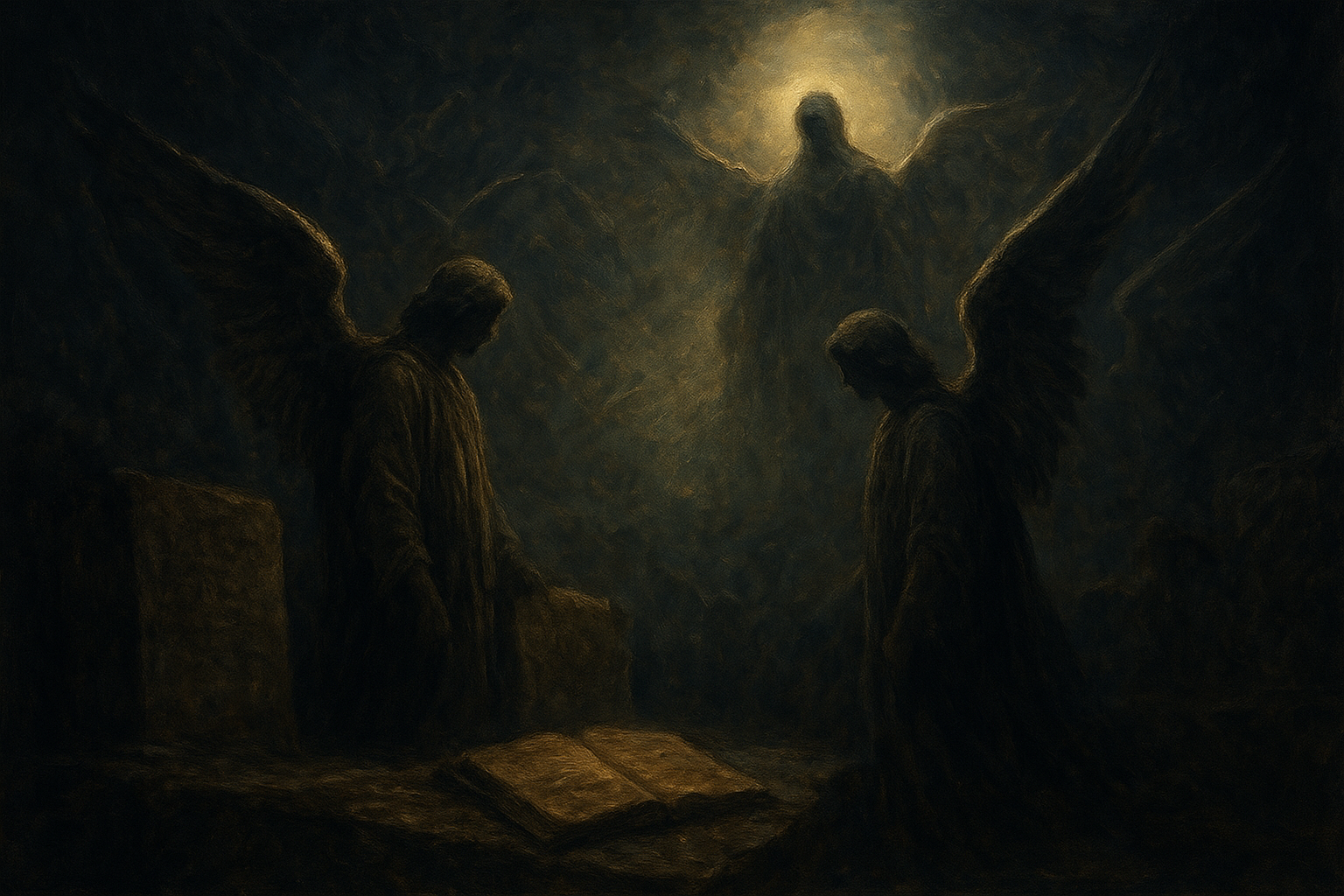
The article examines biblical reasons for God's delayed judgment, highlighting His patience for repentance and the idea that sin must reach its full measure before judgment.
Scripture gives two reasons. God is patient, so people have time to repent. God also lets sin reach its full measure before He judges it. Both reasons appear throughout the Bible.
Judgment of the great day: the final judgment of fallen angels and of humanity, named in Jude 6.
Fullness of sin: the biblical idea that God holds back final judgment until sin has reached its full measure (Genesis 15:16).
Reason One: God Is Patient
Peter answers the question directly. “The Lord is not slack concerning his promise, as some men count slackness; but is longsuffering to us-ward, not willing that any should perish, but that all should come to repentance” (2 Peter 3:9). Paul says the goodness of God leads people to repentance (Romans 2:4). Every day judgment waits is another day to turn back.
Reason Two: Sin Reaches Its Full Measure
God told Abraham that his descendants would not receive Canaan for four generations, because “the iniquity of the Amorites is not yet full” (Genesis 15:16). Daniel describes a time “when the transgressors are come to the full” (Daniel 8:23). Paul says some people “fill up their sins alway” (1 Thessalonians 2:16). In Revelation 14, the angel with the sickle is told to reap because the harvest of the earth is ripe, and the grapes are fully ripe.
These verses share one idea. Judgment comes when sin has finished showing what it is.
The Parable of the Wheat and the Tares
In Matthew 13:24-30, an enemy sows tares among the wheat. The servants ask whether they should pull the tares out. The owner says no, “lest while ye gather up the tares, ye root up also the wheat with them” (Matthew 13:29). He tells them to let both grow together until the harvest.
The parable gives two lessons. Waiting protects the wheat. Waiting also shows which plants are which. Verse 26 says the tares appeared only when the blade sprang up and brought forth fruit. The tares in the parable are darnel, a weed that looks like wheat until the heads form. Jesus explains that the field is the world, the tares are the sons of the wicked one, and the harvest is the end of the age (Matthew 13:37-43).
Is There a Heavenly Audience?
Several passages show heavenly beings watching God’s dealings. Paul says God’s wisdom is made known to the principalities and powers in heavenly places through the church (Ephesians 3:10). He says the apostles are a spectacle to angels (1 Corinthians 4:9). Peter says angels desire to look into the gospel (1 Peter 1:12). In Job 1:6, the sons of God present themselves before the Lord, and Satan comes among them. In 1 Kings 22:19-22, Micaiah sees the host of heaven standing beside the throne.
A Cautionary Hypothesis
Many Christians read Isaiah 14 and Ezekiel 28 as describing the fall of Satan, often called Lucifer. Those passages address the kings of Babylon and Tyre, so that link is a reading, not a stated fact. Revelation 12:4 says the dragon drew a third of the stars of heaven. If that describes angels, the rebellion affected some of the heavenly host and left others unaffected.
One possibility is that time was needed for the effects to show plainly in everyone the rebellion reached, just as the tares in Jesus’s parable showed only when the plants bore fruit. Scripture never states this. It is an inference from the passages above.
Some Fallen Angels Are Already Bound
Jude 6 says angels who left their proper place are “reserved in everlasting chains under darkness unto the judgment of the great day.” Second Peter 2:4 says something similar. So a verdict has already been carried out on some, and the final judgment still waits. The delay concerns the final sentence on all rebels, spirit and human.
What This Does Not Explain
These verses address why final judgment waits. They do not explain why God allowed evil to begin, and Scripture gives no full answer to that question.
The martyrs in Revelation 6:10 ask the same thing the rest of us ask: “How long, O Lord?” They are told to rest a little longer, until the number of their fellow servants is complete (Revelation 6:11). The delay has a stated purpose, even when the full reason stays unclear.
My View
I believe Satan’s rebellion affected some of the heavenly assembly and left others unaffected. I believe God knew from the beginning in whom the rebellion had taken hold, and the other beings did not. I believe the rebellion needed time to show itself in everyone who allowed it to grow. I believe judgment comes when that has run its full course, and then the Lord will gather the tares first and the wheat into His barn. I believe this is why justice has lingered so long.
Read the story of the final harvest in The Watchers’ Hope: The King Returns, Book Four of the Watchers’ Universe series.
Explore in the Encyclopedia
The Watchers
A class of angelic beings who, in 1 Enoch, descend to earth, take human wives, and teach forbidden knowledge.
UFO Abductions
Are alien abductions caused by fallen angels? No one can prove it, but the Bible offers reasons to be cautious. See what the reports describe, what Scripture warns about, and what skeptics say.
Fallen Watchers
The Fallen Watchers are the two‑hundred angels described in 1 Enoch who descended on Mount Hermon, swore an oath to take human wives, and taught humanity forbidden skills, led by Semjaza with Azazel receiving the greatest blame.
Bene ha’Elohim
Bene ha’Elohim: Hebrew for “sons of God,” a title the Old Testament uses for heavenly beings in God’s court and in Genesis 6:1-4 for the group who took human women as wives.
How Did the Nephilim Return After the Flood?
The entry explains a theory that fallen angels returned after the Flood, causing a second incursion of Nephilim in Canaan, as presented in CK Quarterman's book The Watchers Fallen.
What Was the Judgment of the Watchers?
The judgment of the fallen Watchers describes how God bound these angels in darkness, reserving them for fire on the great day, with specific sentences for leaders like Azazel and Semjaza.
Did the Watchers Have Anything to Do With the Tower of Babel?
An exploration of the theory that the fallen angels known as the Watchers were involved in the construction and purpose of the Tower of Babel, linking ziggurats, Shinar, and a post‑Flood second incursion.
Will Fallen Angels Take Physical Bodies At The End Of Time
The entry examines whether fallen angels will assume physical bodies, analyzing Revelation 12 and related biblical passages, noting that Scripture records angelic appearances in flesh but does not state a forced embodiment.
The Ziggurat and the Second Incursion
The Ziggurat and the Second Incursion: the stepped temple tower of Babel in Shinar, built to lift a shrine toward heaven, and the place where the second incursion of fallen angels is understood to have begun.
Portals in the Bible
A portal in the Bible refers to a gate, doorway, ladder, or opened heaven where angels and divine glory pass between heaven and earth, though the word itself never appears in Scripture.
Second Incursion
Second Incursion: the return of fallen angels to earth after the Flood, understood as the source of the Nephilim in Canaan.
The Angelic View
The sons of God were fallen angels. They took on physical form and married human women.
Keep researching. Don't miss what's uncovered next.
Get first access to new Encyclopedia entries, Timeline updates, Watchers, Nephilim, Giants, Demons, Deliverance, and UFO/UAP research, plus new books and releases from CKQBooks. Free. Takes ten seconds.