
Tamim
Also known as: tamim (תָּמִים), tāmîm, tam (תָּם), root tamam (תָּמַם), Greek teleios (Septuagint, Genesis 6:9), Latin perfectus (Vulgate)
Tamim: the Hebrew word in Genesis 6:9 meaning complete, whole, or without blemish, used of Noah as “perfect in his generations.”
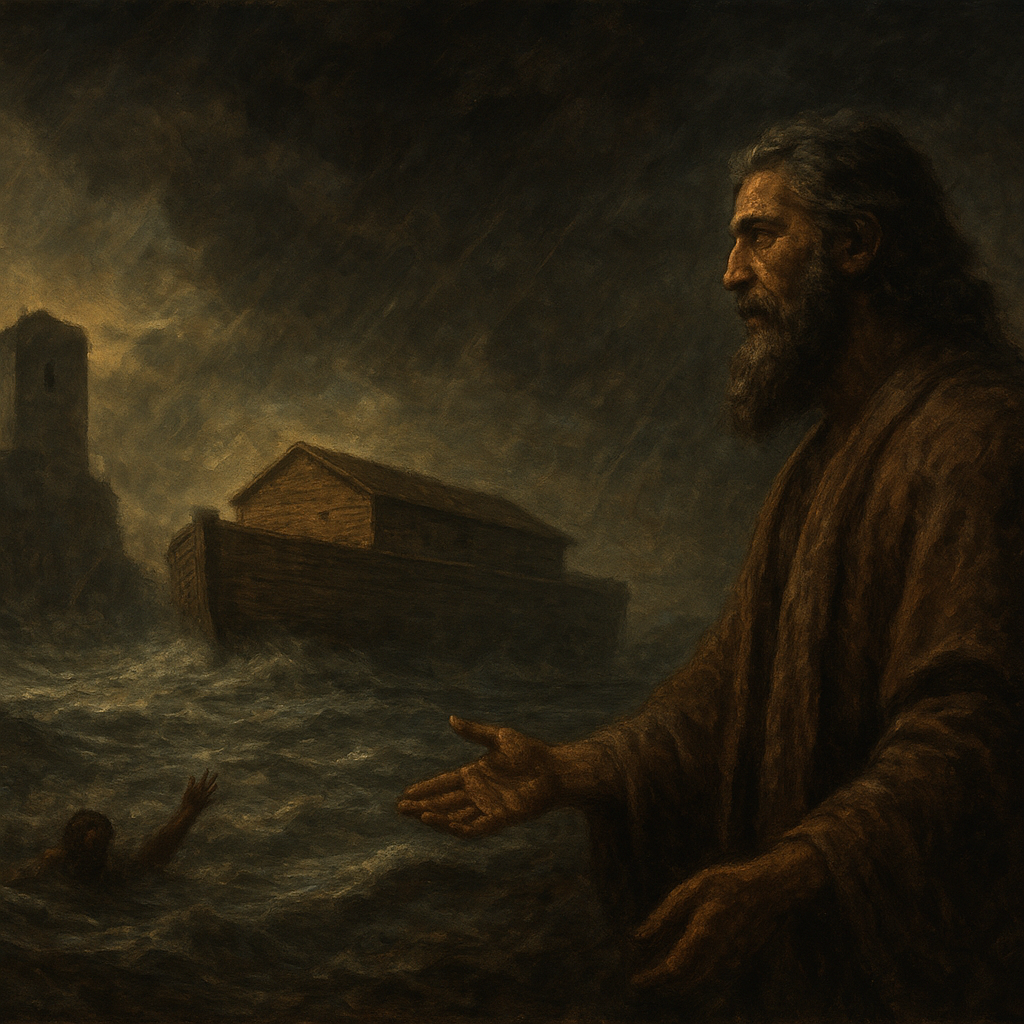
Tamim is a Hebrew word that means complete, whole, or without blemish. It comes from the root tamat, “to be complete.” Genesis 6:9 is its first use in the Bible: “Noah was a just man and perfect in his generations, and Noah walked with God.” The Hebrew phrase is tamim hayah bedorotav, “he was tamim in his generations.”
The Old Testament uses tamim for physical wholeness. God requires sacrificial animals to be tamim, without blemish (Exodus 12:5; Leviticus 1:3). The word also describes a person of integrity, as with Abraham (Genesis 17:1) and Job (Job 1:1, using the related form tam). In Genesis 6:9, the word sits beside “generations” (dorot), and the verse opens with the formula “These are the generations (toledot) of Noah.” The surrounding text is about family lines and descent.
Noah’s character does not explain the word by itself. Noah was not sinless. He plants a vineyard, drinks the wine, and lies uncovered in his tent soon after the Flood (Genesis 9:20-21). A word that means sinless would not fit the man. A word that means whole in his line fits the passage. The verses just before it describe the sons of God taking wives and the Nephilim appearing on the earth (Genesis 6:1-4). Genesis 6:12 then says “all flesh had corrupted his way upon the earth.” Against that background, Noah’s family stands out as the line that stayed whole.
Ancient readers asked the same question about Noah’s parentage. In 1 Enoch 106 and in the Genesis Apocryphon from Qumran (1QapGen 2), Lamech sees that his newborn son looks unusual and fears a Watcher fathered the child. He asks Methuselah, and Methuselah asks Enoch. Enoch answers that the child is Lamech’s own son. These texts show that Jewish readers of the Second Temple period connected Noah’s birth with the question of angelic fathers. Sirach 44:17 says Noah “was found perfect and righteous.” Later rabbis debated whether “in his generations” praises Noah or measures him against a wicked age (Genesis Rabbah 30:9; Sanhedrin 108a).
Noah’s line was the only one that had not mixed with a son of God or with one of their offspring. Eight people entered the ark (Genesis 7:7, 13; 1 Peter 3:20; 2 Peter 2:5). The LORD shut the door behind them (Genesis 7:16). No Nephilim blood survived on the ark. The Flood ended the first generation of the Nephilim.
Giants appear again after the Flood. Genesis 6:4 says the Nephilim lived “in those days, and also afterward.” The spies see them in Canaan (Numbers 13:33), and the Anakim, sons of Anak, live at Hebron (Numbers 13:22, 28). Moses and Joshua record the Anakim and the Rephaim as peoples who had to be driven out (Deuteronomy 2:10-11; 9:2; Joshua 11:21-22). Because the Flood removed the first line, these later Nephilim came from a second incursion of fallen angels.
## My View
I believe tamim in Genesis 6:9 describes Noah’s bloodline. I believe Noah’s family was the only line in the world that no son of God and no Nephilim had touched. I believe the Nephilim of Numbers 13:33 came from a second incursion after the Flood.
Scripture References
Sources
Biblical TextGenesis 6:9; 7:13; 7:16; 9:20-21; Numbers 13:33. 1 Enoch 106:1-12 (Nickelsburg & VanderKam 2004). Genesis Apocryphon (1QapGen) 2:1-26 (Fitzmyer 2004). Sirach 44:17. Genesis Rabbah 30:9; Sanhedrin 108a. Brown, Driver, Briggs, A Hebrew and English Lexicon (1907).
Keep researching. Don't miss what's uncovered next.
Get first access to new Encyclopedia entries, Timeline updates, Watchers, Nephilim, Giants, Demons, Deliverance, and UFO/UAP research, plus new books and releases from CKQBooks. Free. Takes ten seconds.